Regional Energy Partners Convene in Brussels to Move T-MED from Strategy to Implementation
Regional Energy Partners Convene in Brussels to Move T-MED from Strategy to Implementation
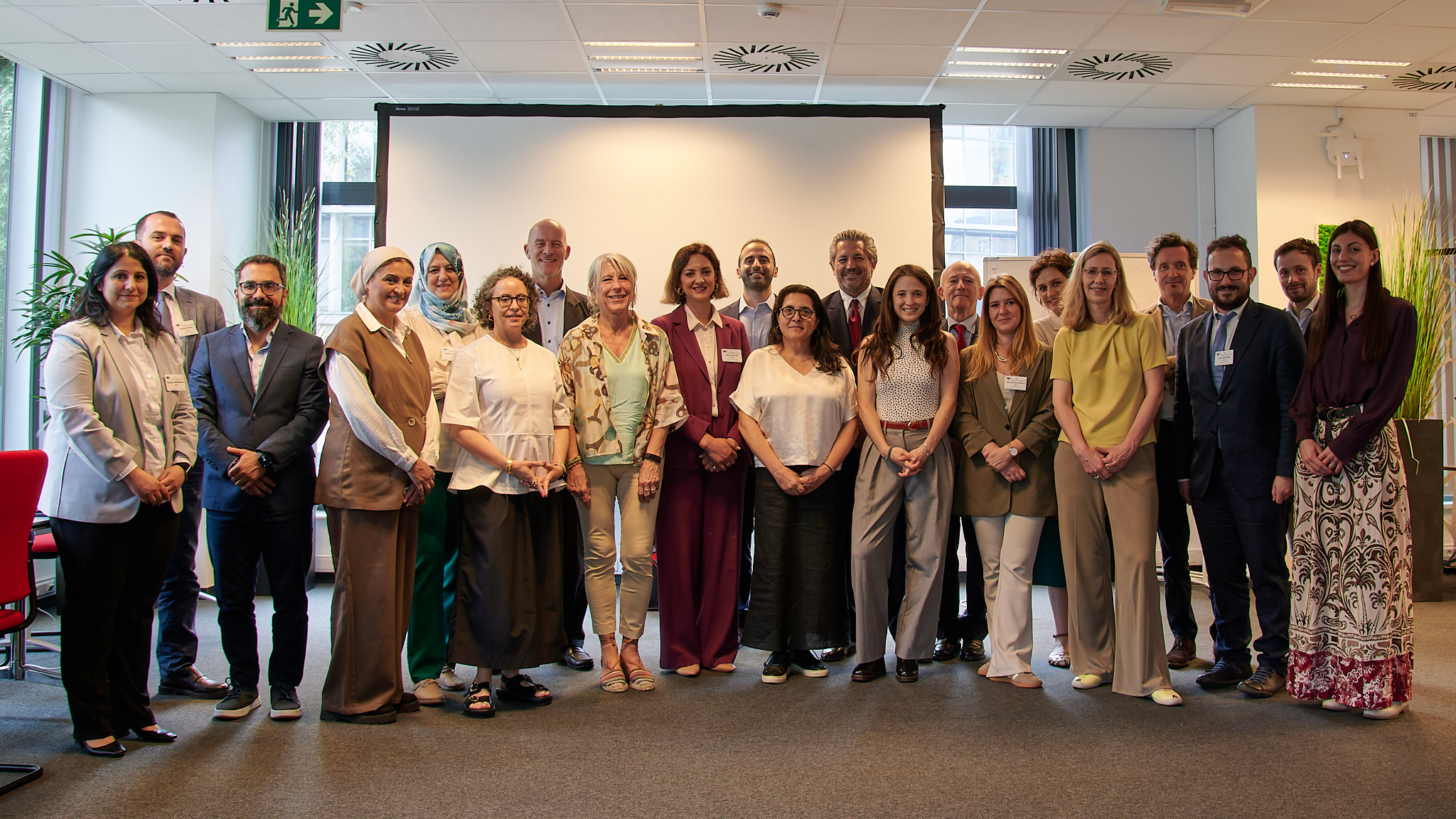
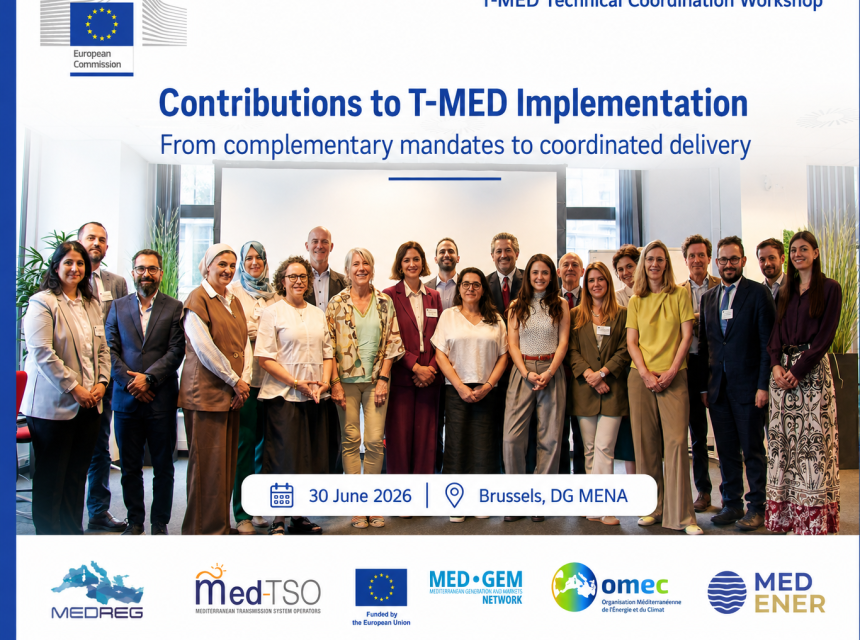
Brussels, 30 June 2026 — On the eve of the Union for the Mediterranean (UfM) Energy Platform meeting, leading Mediterranean energy organisations gathered in Brussels for the T-MED Technical Coordination Workshop, a full-day session dedicated to turning the newly launched Trans-Mediterranean Renewable Energy and Clean-Tech Cooperation Initiative (T-MED) into coordinated, concrete action. The MED-GEM Network organised and took part alongside MEDREG, Med-TSO, OMEC, MedENER and RCREEE, together with the European Commission (DG MENA and DG ENER) and a range of regional energy stakeholders. The day was held as an open exchange, allowing participants to share views, concerns and proposals in a confidential setting. The tone throughout was collaborative and solution-oriented, with a shared determination to move beyond parallel activities toward genuine regional coordination.
A win-win framing for the region
The workshop opened with a presentation of T-MED by Florian Ermacora as one of the first concrete deliverables under the Pact for the Mediterranean. The initiative was framed not as an export-only or extractive agenda, but as a win-win partnership aimed at unlocking the Southern Mediterranean's renewable energy and clean-technology potential while supporting domestic decarbonisation, affordable energy, industrial development, job creation and energy security on both shores. Participants were introduced to T-MED's five operational pillars: an Investment Platform mobilising several billion euros of renewable and clean-tech investment, a pragmatic regulatory accelerator, infrastructure and interconnection planning, skills and training, and a clean-tech industrial ecosystem.
General trends from the brainstorming
The afternoon was structured around four thematic tables working through successive rounds. Without attributing specific views, several clear and convergent trends emerged across the room.
On regulation and investment frameworks, participants consistently identified regulatory certainty, transparency and political commitment as the foundation of bankability. Discussions pointed toward stronger regional regulatory coordination, a possible common green certification framework drawing on lessons from CBAM implementation, and a dedicated high-level energy dialogue to build investor confidence.
On infrastructure and grid integration, the dominant theme was a shift from a project-by-project logic toward a genuinely regional planning approach. Participants explored common cost-benefit methodologies, grid-readiness assessments and the idea of a T-MED "Project of Interest" mechanism, alongside earlier and more strategic engagement with international financial institutions.
On industrial value and clean-tech value chains, the conversation centred on demand-driven, shared value creation rather than relocation alone. Participants highlighted the importance of mapping existing manufacturing capabilities and skills, promoting EU–Southern Mediterranean joint ventures, supporting clean-tech entrepreneurship, and learning from established industrial success stories in the region.
On knowledge, scenarios and policy alignment, a strong consensus formed around building a shared T-MED dashboard that consolidates existing partner tools rather than duplicating them, with each organisation contributing according to its comparative advantage and translating data into clear, decision-oriented messages for policymakers, investors and industry.
A coordination layer for the Mediterranean
The recurring conclusion across all four tables was that T-MED's added value lies not in creating new institutions, but in connecting existing regional expertise, linking regulation, infrastructure, industry, finance, skills and data into one coherent implementation framework. The workshop's emerging ideas and proposals are set to feed directly into the regional discussion at the following day's UfM Energy Platform meeting, helping carry the momentum from strategy toward execution across the Southern Mediterranean.
- Watch the photo album https://flic.kr/s/aHBqjCXUuq