From Studies to Strategy: MED-GEM's Seventh Steering Committee Charts the Road to December 2026
From Studies to Strategy: MED-GEM's Seventh Steering Committee Charts the Road to December 2026
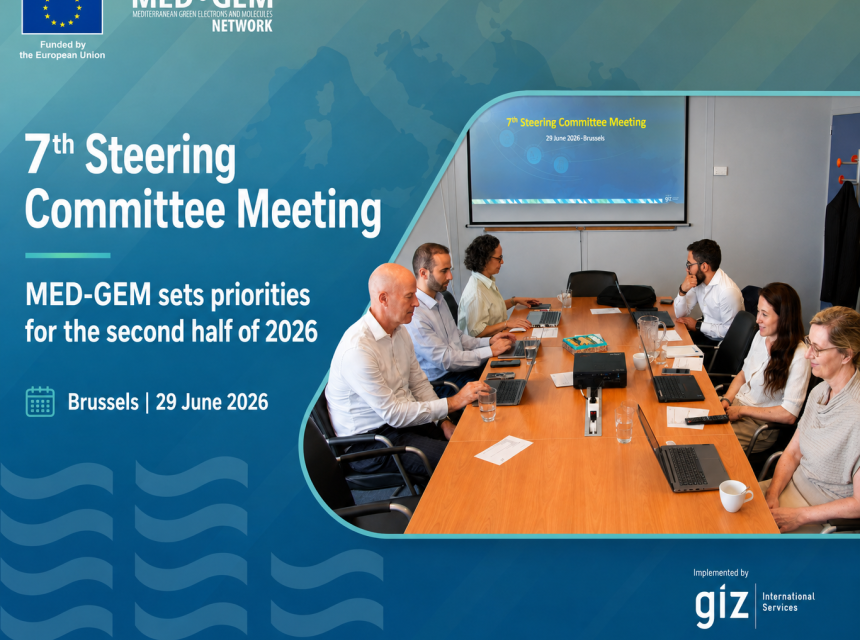
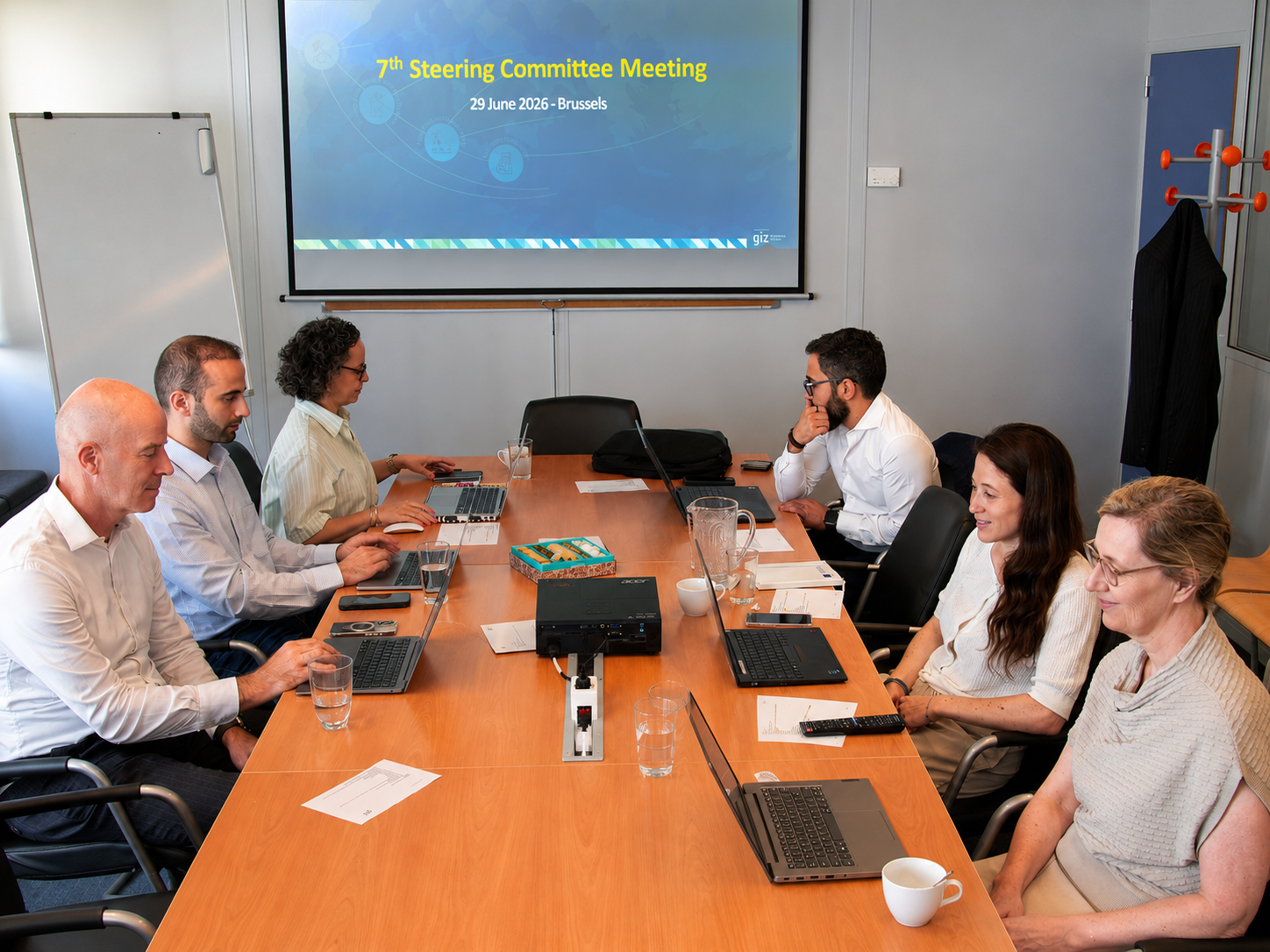
Brussels, 29 June 2026 — The MED-GEM Network held its seventh Steering Committee meeting in Brussels, bringing together and online National Focal Points and Country Correspondents from Jordan, Palestine, Morocco, Egypt, Lebanon and Tunisia, alongside the European Commission's Directorate-General for the Middle East, North Africa and the Gulf (DG MENA).
The meeting took place at a pivotal moment. As Europe reinforces its push for electrification and fossil-fuel independence, the newly launched Trans-Mediterranean Renewable Energy and Clean Tech Initiative (T-MED), with its regulatory accelerator, investment platform, skills agenda and infrastructure pillar, offers a common framework for the region's clean energy cooperation. MED-GEM marked the occasion by convening a dedicated webinar on the first call for expressions of interest under the T-MED investment platform, presented by Network Director Frank Wouters and Nazanin Nejati of DG MENA.
Delivery on the ground
The first half of 2026 confirmed a simple thesis running through MED-GEM's work: the value of the energy transition will not sit in the molecule alone: it will sit in the corridor, in the skills, industries and partnerships built around it.
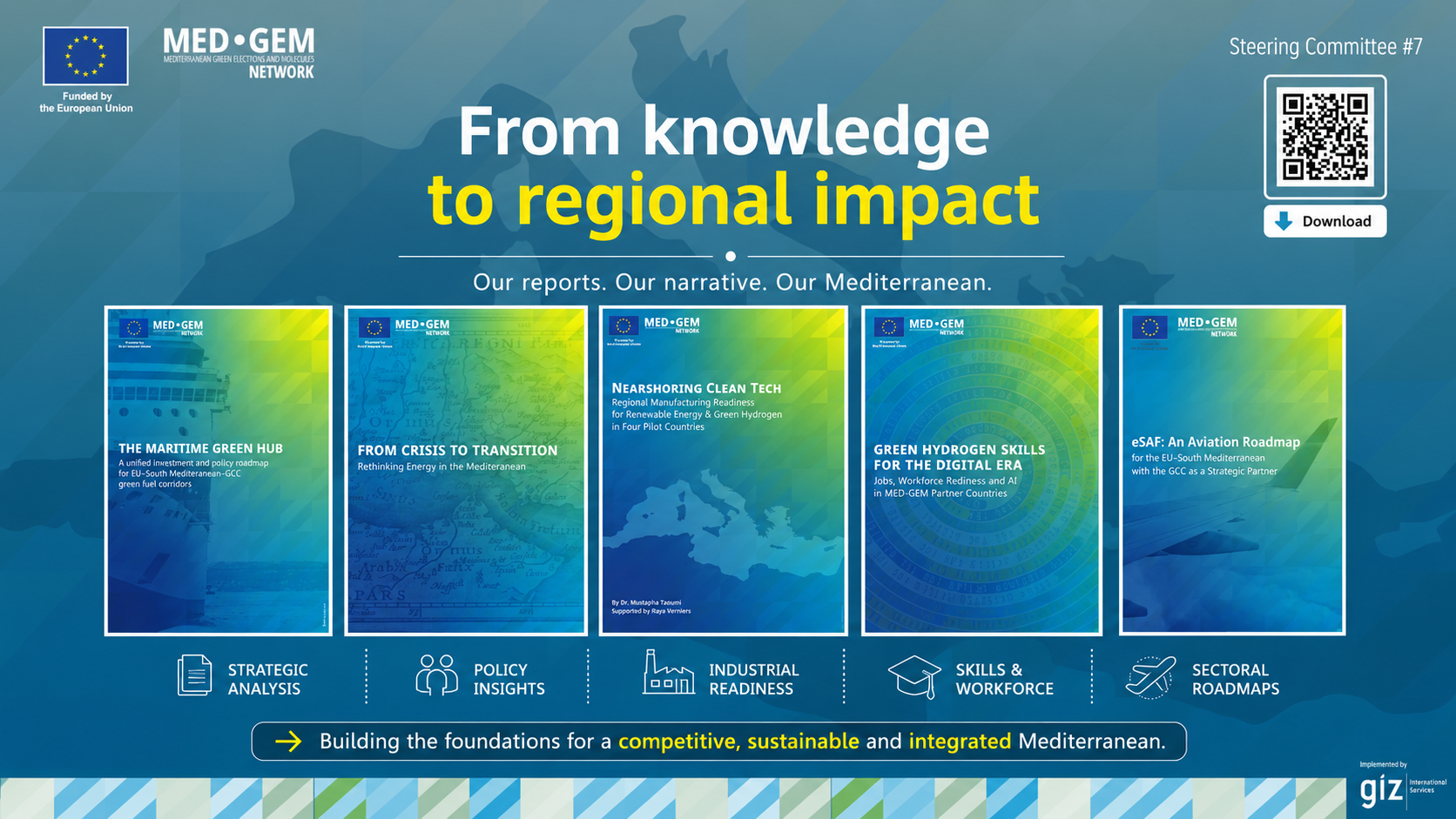
Five flagship reports were published and turned into full communication campaigns, covering green fuel corridors for maritime transport, the regional impact of the energy crisis, clean-tech manufacturing readiness, green hydrogen skills in the digital era, and an eSAF roadmap for aviation. Six CBAM info sessions were held across partner countries as the mechanism entered into force, supported by the relaunched CBAM and Certification Helpdesk. National studies were launched in Palestine, Lebanon, Morocco and Jordan.
Partner countries reported tangible momentum: Morocco's renewable capacity now stands at 5.7 GW, some 45.6% of installed capacity; Jordan adopted an updated 2035 energy strategy targeting 40% renewable electricity and signed its first $1 billion green ammonia investment in Aqaba; Egypt is accelerating its renewables plans to reach 24 GW by 2028.
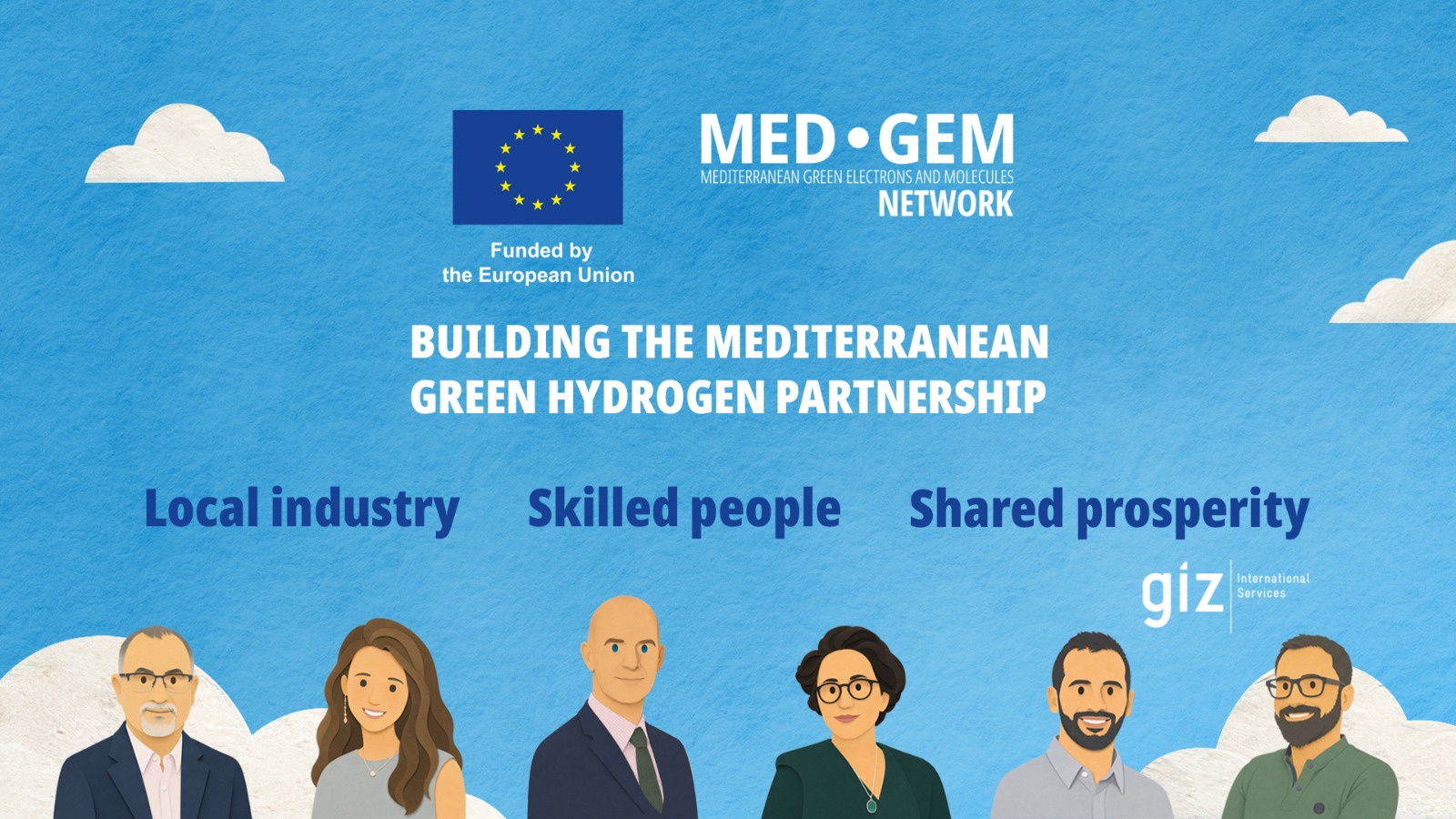
The session closed with the premiere of MED-GEM's first advocacy film: a paper-cut animation anchored in two messages that summarise the project's conviction: no bankable hydrogen without bankable skills, and no strategic partnership without shared industrial value. Watch it here.
What comes next
The Steering Committee endorsed an ambitious action plan through December 2026:
A business-to-business matchmaking event between EU, South Mediterranean and Gulf project promoters, industrial players and investors will close the year in December, preceded by an explanatory Pitstop webinar in October.
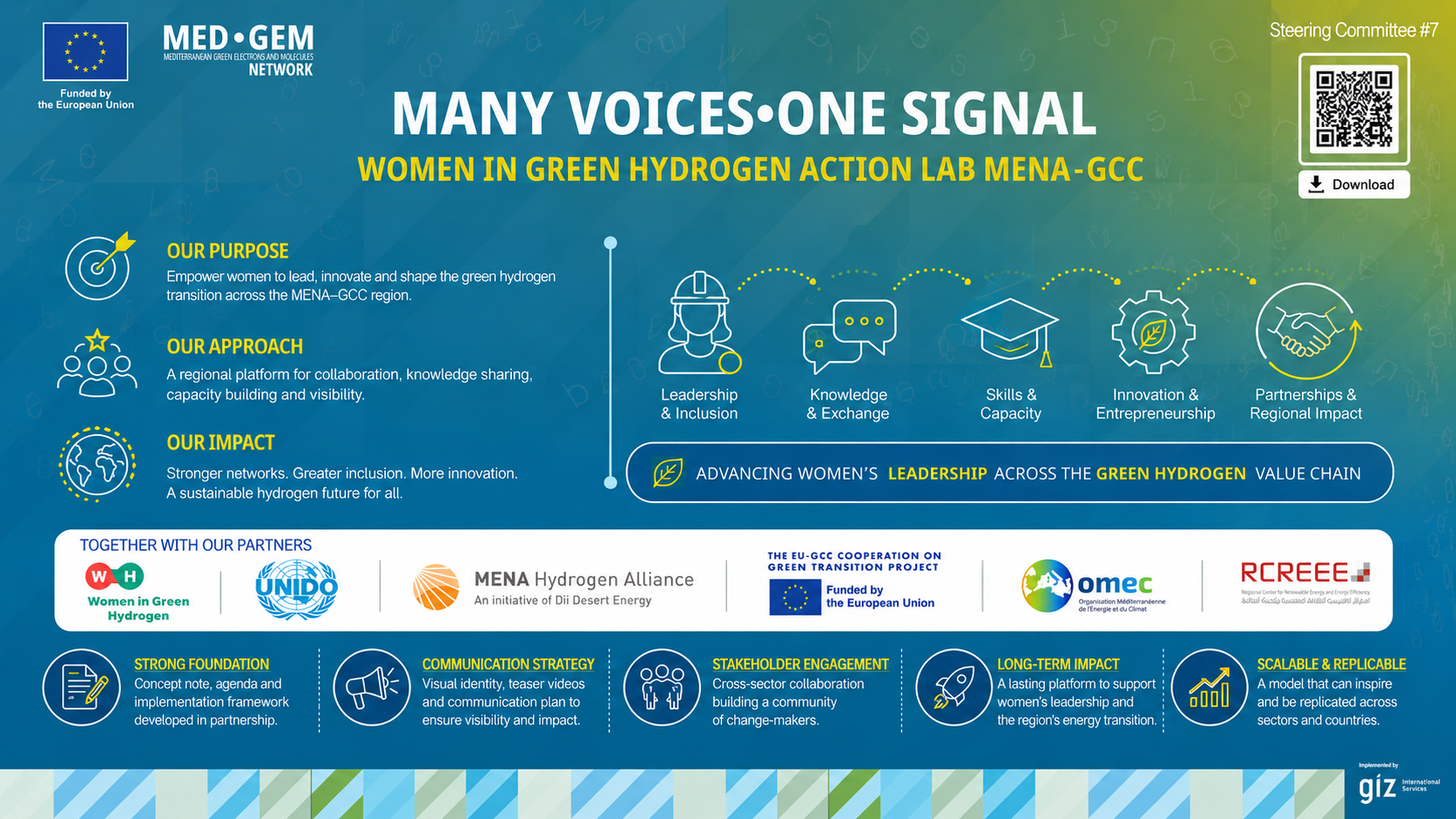
The CBAM Helpdesk continues with an info session on verification readiness in September and further national sessions across partner countries. Webinars on the eSAF and eClean Fuels reports, the nearshoring and manufacturing report, and the skills and AI report will carry the analytical agenda forward, alongside the Women in Green Hydrogen Action Lab.
At national level, studies will be finalised in Palestine, Lebanon, Morocco and Jordan; Egypt will host a summer school and hackathon; Jordan will hold the EU–Jordan investment conference on 19 November; and MED-GEM will be represented at NAPEC in Algeria on 5–6 October.
The direction of travel is clear: from knowledge to action, and from projects to partnerships, building the corridors that will carry the Mediterranean's energy transition.
The MED-GEM Network is funded by the European Union and implemented by GIZ International Services.