
Hydrogen & Advanced Fuels Summit Strengthens EU-GCC-MENA Cooperation
Southern Mediterranean Markets at the Core
Abu Dhabi, United Arab Emirates - 14 January 2026
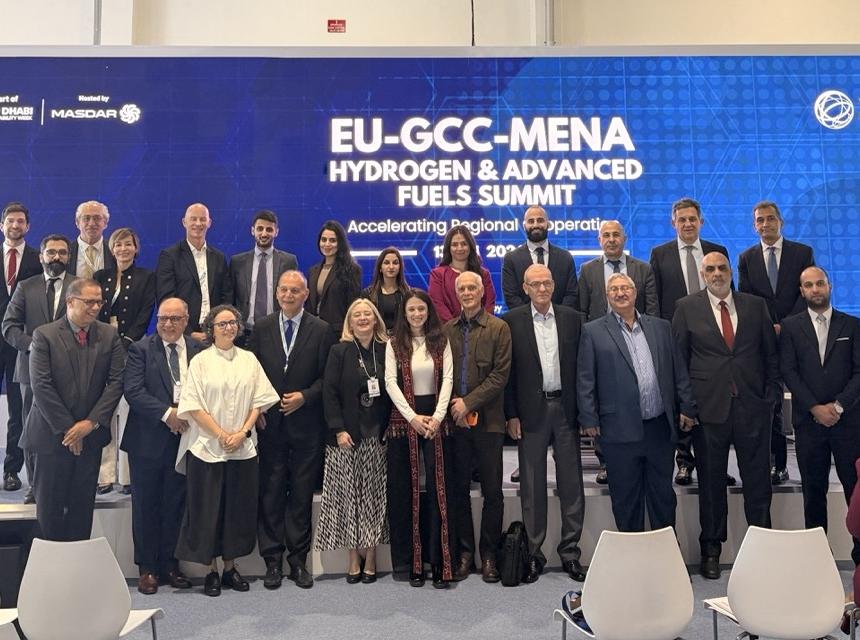
The EU-GCC-MENA Hydrogen & Advanced Fuels Summit, held during Abu Dhabi Sustainability Week, marked a significant milestone in regional clean energy cooperation. Convening senior policymakers, regulators, investors and industry leaders from Europe, the Gulf and the wider Middle East and North Africa, the Summit sent a clear message: hydrogen cooperation has entered a phase of delivery, with the Southern Mediterranean emerging as a strategic anchor of future markets.
Organized under a Team Europe approach by the EU–GCC Cooperation on Green Transition Project, in close coordination with the European Union Delegation to the UAE, the Embassy of Germany in the UAE, and the MED-GEM Network, the Summit reflected the EU’s collective engagement in fostering long-term partnerships between Europe, the GCC and the Southern Neighbourhood.
From Political Ambition to Market Delivery
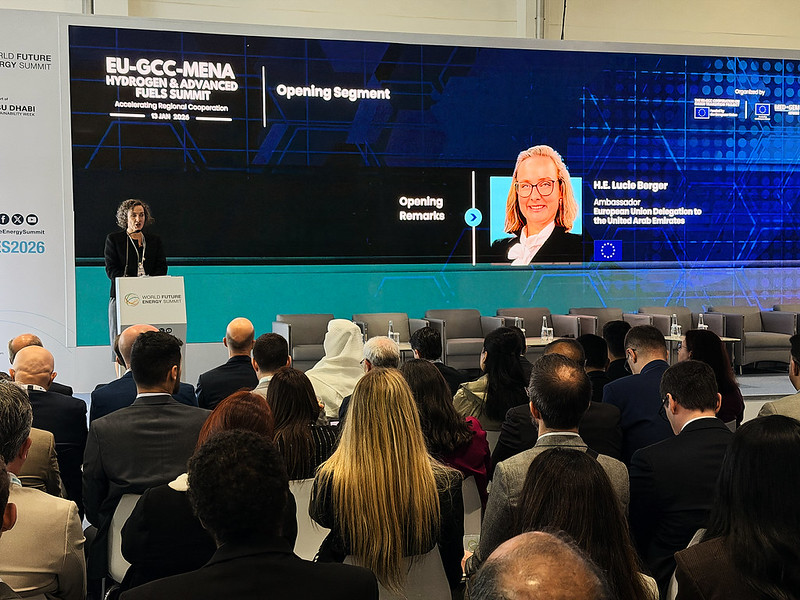
Set against the global convening power of Abu Dhabi Sustainability Week, discussions focused on translating political ambition into concrete projects. Participants examined how regulatory convergence, certification frameworks, financing instruments and public–private cooperation can accelerate the development of hydrogen and advanced fuels value chains across regions.
A particular emphasis was placed on Southern Mediterranean countries as emerging hydrogen hubs, linking renewable production potential, industrial demand, infrastructure development and export corridors connecting the Mediterranean, the Gulf and European markets.
Hydrogen and advanced fuels were consistently framed not only as climate solutions, but also as drivers of energy security, industrial competitiveness and sustainable growth, especially in hard-to-abate sectors such as aviation, shipping and heavy industry.
Europe Sets the Direction: From Strategy to Implementation
The opening segment set the political tone for the day. Ditte Jørgensen, Director-General for Energy at the European Commission, underlined Europe’s readiness to move decisively from strategy to implementation through strong international partnerships and aligned regulatory frameworks.
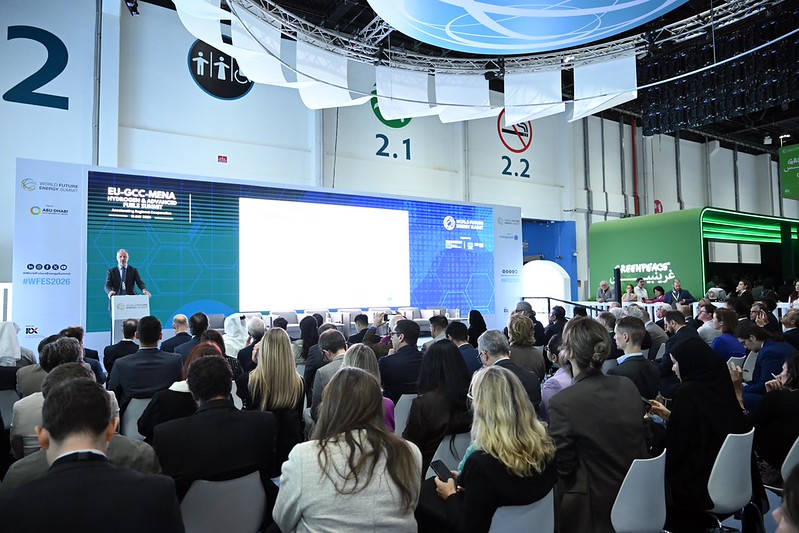
“Hydrogen and its derivatives will play a central role in Europe’s energy transition, particularly in sectors where direct electrification is not feasible. Moving from ambition to implementation requires strong international partnerships, regulatory alignment and close cooperation with our neighbours in the Mediterranean and the Gulf.”
Ditte Jørgensen, Director-General for Energy, European Commission
This vision was complemented by industry leadership from Mohammad Abdelqader El-Ramahi, Chief Hydrogen Officer at Masdar, who highlighted the role of flagship projects in building scale, confidence and market credibility.
Cross-Border Cooperation as a Geopolitical and Economic Lever
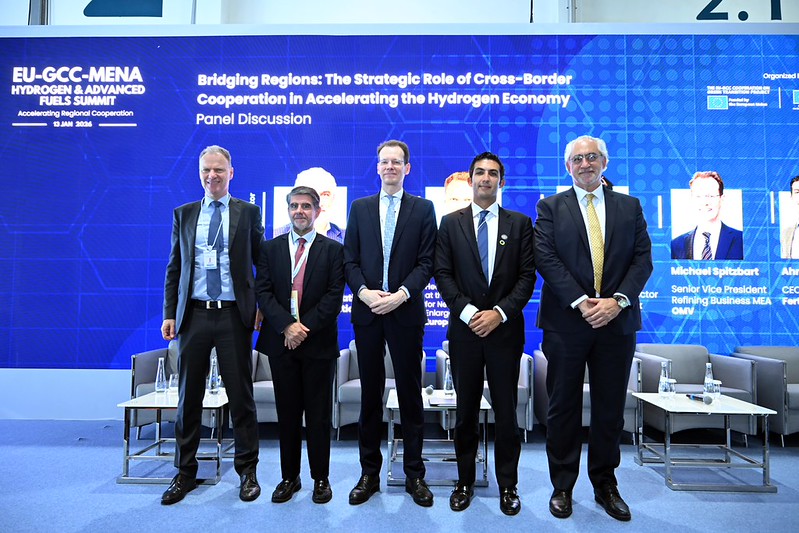
The high-level dialogue on Bridging Regions: Cross-Border Cooperation, moderated by Spyros Kouvelis, demonstrated that trans-regional cooperation is no longer optional.
Contributions from Florian Ermacora, Raul Manzanas, Michael Spitzbart, and Ahmed El-Hoshy highlighted that:
- Voluntary demand alone will not scale hydrogen markets.
- Regulatory clarity and long-term policy signals are prerequisites.
- Hydrogen projects resemble utility-scale infrastructure, requiring patient capital, long-term offtake and coordinated public–private action.
- EU-led instruments and development finance institutions play a catalytic role in moving projects to Final Investment Decision.
No Market Without Trust: Regulation and Certification at the Core
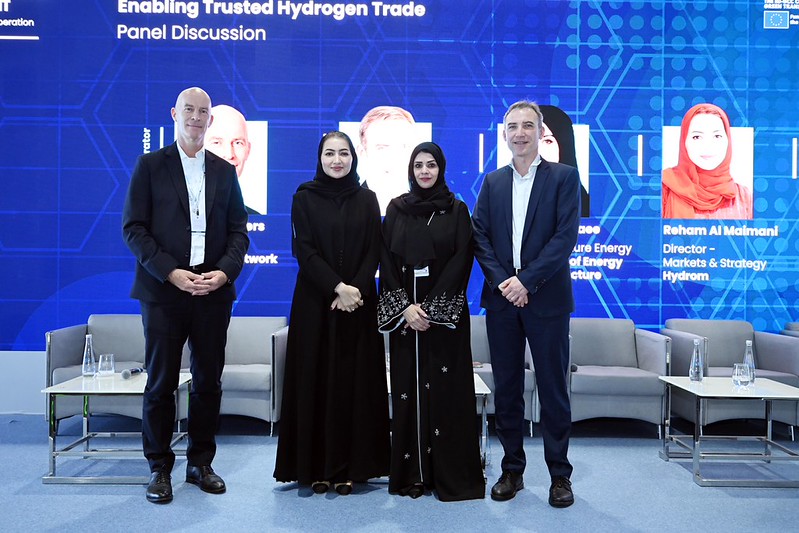
Session I, Regulatory Frameworks and Certification - Enabling Trusted Hydrogen Trade, moderated by Frank Wouters, addressed a central condition for market development: trust.
Speakers including Frank Mischler, Nawal Al Hanaee, and Reham Al Maimani stressed that certification and regulatory alignment are not technical details, but gateways to international trade and investment.
For Southern Mediterranean countries in particular, early alignment with EU sustainability and RFNBO requirements was identified as essential to avoid delays, redesign cycles and loss of bankability.
MED-GEM Network: Connecting Policy, Markets and Projects
From a market and implementation perspective, the Summit also showcased how MED-GEM Network bridges policy dialogue with concrete project development and ecosystem building across the Southern Mediterranean.
“For the Southern Mediterranean, hydrogen is not only a climate opportunity, but also an industrial and economic one. Through MED-GEM, the EU is supporting the creation of investable projects, regional business ecosystems and cross-border partnerships that connect Mediterranean markets with Europe and the Gulf.”
Frank Wouters, Director, MED-GEM Network
Across sessions, MED-GEM’s role was positioned as connecting instruments, actors and regions, ensuring that Mediterranean countries are not peripheral suppliers, but integrated partners in emerging hydrogen corridors.
From Innovation to Bankability: Scaling Ecosystems, Not Pilots
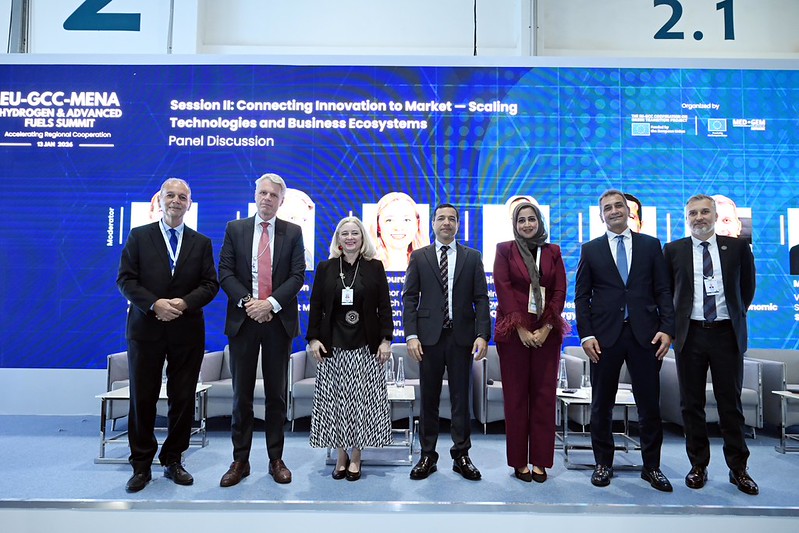
Session II, Connecting Innovation to Market, moderated by Kamel Bennaceur, shifted the focus to delivery.
Industry and research leaders, including Mark Geilenkirchen, Lourdes Vega, Siddiqa Al Lawati, Kamel El Kholy, Ahmed Saad, and Manuel Kuehn, converged on a shared conclusion:
- Innovation must be embedded in industrial hubs, shared infrastructure and logistics corridors.
- Hydrogen markets will scale through ecosystems, not isolated pilots.
- Ports, storage, grid integration and export infrastructure are decisive enablers.
- The Mediterranean offers a unique platform for hub-based, cross-border deployment models.
Looking Ahead: Deepening Trilateral Cooperation
The Summit concluded with a shared commitment to deepen EU–GCC–MENA cooperation, advance regulatory harmonisation and support bankable hydrogen and advanced fuels projects delivering tangible benefits across regions.
For MED-GEM Network, the outcome is clear: the Mediterranean is not a periphery, but a connector, linking European demand, Gulf investment and regional production potential. Turning this shared vision into reality will require sustained cooperation, trusted frameworks and a continued focus on delivery.