
Green Hydrogen on Tap: Blending Molecules, Bridging Shores
MEDREG Green Hydrogen Task Force Online Webinar
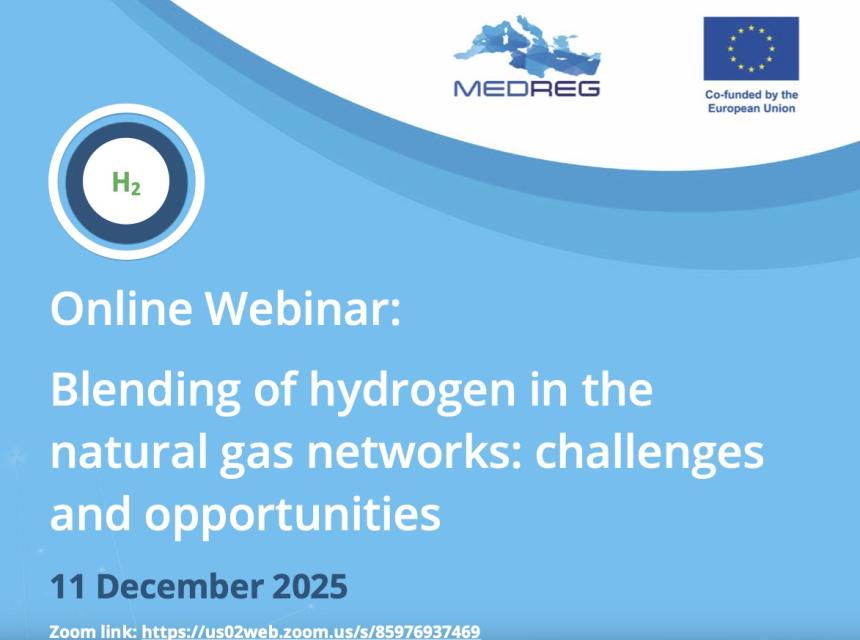
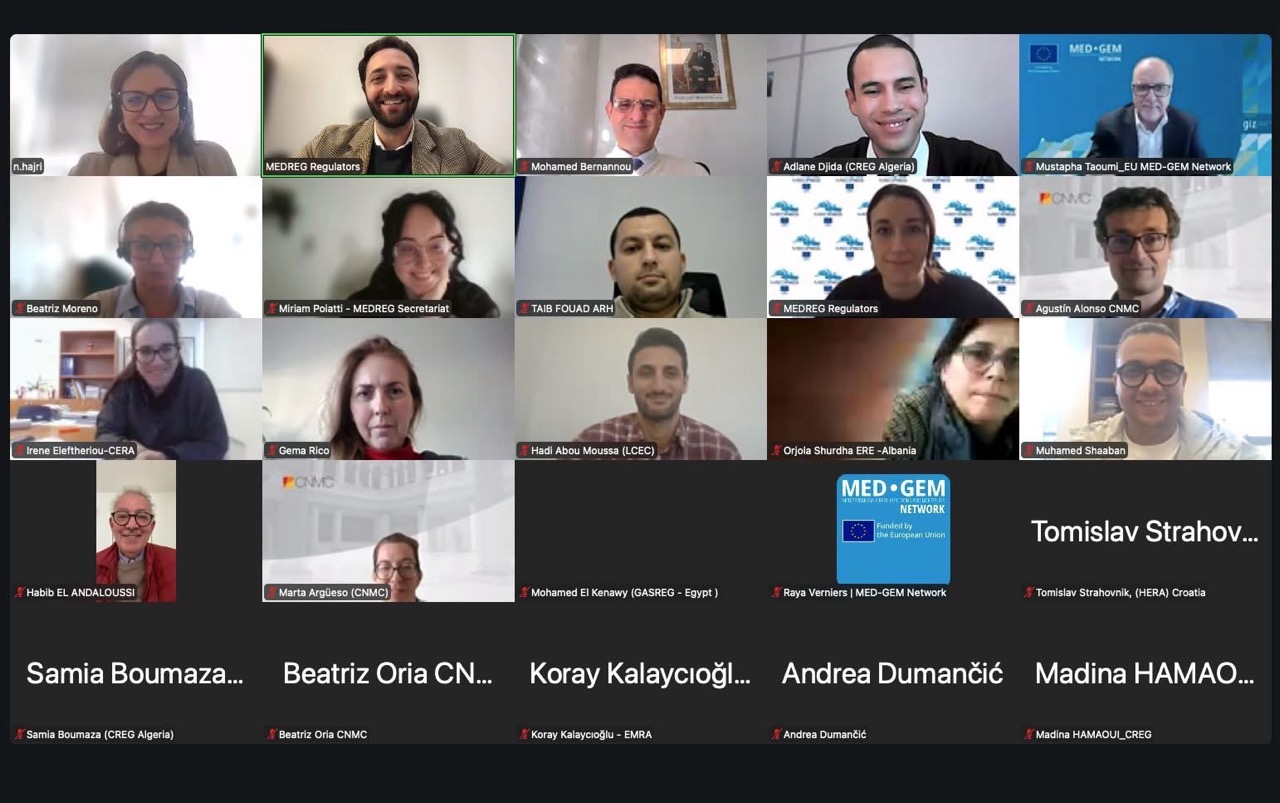 As Europe and the Southern Mediterranean hunt for cleaner energy, regulators are looking not at futuristic mega-pipelines but at the pipes they already have. A MEDREG Hydrogen Task Force webinar on 11 December brought together regulators, system operators and the EU-funded MED-GEM Network to examine how far hydrogen can be blended into existing gas grids, and what happens when molecules cross borders faster than regulation.
Hydrogen blending, argued Mustapha Taoumi of the MED-GEM Network, is “the pragmatic low-carbon lane that builds the foundation for a full hydrogen system.” Injecting green hydrogen into today’s gas networks, he said, can accelerate market creation, avoid stranded gas assets and monetise Southern Mediterranean renewable resources while dedicated hydrogen infrastructure is still on the drawing board. But, he warned, “blending is technically feasible, yet it must be engineered, not improvised.”
The technical consensus emerging from pilots in France, Italy, Germany, Portugal and Spain is converging around an upper limit of about 20% hydrogen by volume. Beyond that, calorific value drops, material stress rises and burners misbehave. Pedro Furtado of Portuguese TSO REN reported that his country’s transmission grid is now certified for 10% hydrogen, after exhaustive assessment of pipelines, welds, compressors and underground storage. “The good news is we can handle 10% with minor investments,” he said, “provided we change the way we operate and inspect the system.”
Downstream, Spanish distributor SEDIGAS has tested blends of up to 20% in distribution networks without major structural upgrades, while Spain’s regulator CNMC is building a new connection regime for hydrogen producers. “Our experience shows that around 20% hydrogen can be accommodated without massive new investments, but going beyond that demands much deeper analysis,” noted Joan Batalla, President of SEDIGAS. Yet cross-border rules lag behind: interconnections are still capped at 2% hydrogen, a constraint that several speakers described as technically conservative and commercially stifling.
Further north, regulators are quietly redesigning the rulebook to let hydrogen in without upsetting the gas business model. In Spain, CNMC has created a new framework that defines how renewable gas and hydrogen producers connect to – and access capacity in – the natural gas network, under tight quality and blending caps of 5% nationally and 2% at interconnections. The system ranks projects by maturity, grid impact and offtake commitments, using competitive procedures to avoid speculative “capacity hoarding”. As Beatriz Moreno, Head of Technical Management of the Systems and European Regulation at CNMC, put it, the aim is “to give promoters clear, predictable rules while protecting network integrity and consumers,” turning hydrogen from a regulatory exception into a managed part of the gas system.
From Algiers, CREG underlined the other side of the equation: consumer safety. Large, ageing distribution networks, millions of domestic users and long export pipelines make regulators wary. Pilot zones and phased regulation, argued CREG’s Adlane Djida, are essential before any large-scale shift: “For us, hydrogen is both a strategic opportunity and a complex safety challenge, so we must move step by step, proving in pilots that every blend remains fully safe and transparent for consumers before we scale up.”
For Mr Taoumi, the task is as political as it is technical. Europe and its Southern neighbours, he insisted, need a “common understanding” of standards and certification if hydrogen is to flow as smoothly as gas does today. Blending, he reminded participants, “is not the final destination, but an essential first step toward a shared Mediterranean energy future.”
Read Dr Mustapha Taoumi's keynote