
Sustainable Aviation Fuels: scaling ambition in a fast-growing aviation market
Aviation is entering a decisive decade. As flight numbers accelerate worldwide and aircraft fleets expand faster than ever, the sector faces a structural paradox: demand for air connectivity continues to rise, while the window to decarbonise is rapidly narrowing. In this context, Sustainable Aviation Fuels (SAF) have emerged as the most immediate and scalable solution to reduce aviation emissions in the near and medium term.
This challenge was at the heart of the MED-GEM Network Quarterly Info Session on Sustainable Aviation Fuels, organised in collaboration with the International Power-to-X Hub, bringing together policy, market and technical expertise to unpack the state of play of the EU SAF market and its regulatory implications.
A growing market that still falls short
Aviation currently accounts for around 2.6 percent of global CO₂ emissions, a share that is set to increase as air traffic grows. According to industry projections, the number of flights is expected to double over the next 15 years, while the global aircraft fleet is projected to grow from 28,000 aircraft today to more than 42,000 within the next decade. Each new aircraft entering service is likely to operate for 40 years or more, locking in emissions well beyond 2050.
As Frank Mischler, Director of the International Power-to-X Hub, underlined during the session, this dynamic leaves little room for delay. Fuel-related measures alone represent around 70 percent of aviation’s emissions reduction potential, making SAF the central lever for decarbonisation in the absence of viable large-scale alternatives.
While electric and hydrogen-powered aircraft continue to attract attention, their deployment at scale is unlikely before 2040–2045, due to aircraft design constraints and infrastructure requirements. In the meantime, SAF remains the only solution compatible with today’s fleets and airport systems.
Supply constraints and technology bottlenecks
Despite growing political momentum, global SAF production remains far below what is required. Today, roughly 90 percent of SAF supply comes from HEFA fuels, produced mainly from used cooking oils and waste fats. While technically mature, HEFA pathways face structural limits: feedstock availability caps their contribution at around 10 percent of total aviation fuel demand, and production costs remain two to two-and-a-half times higher than conventional kerosene.
Other SAF pathways exist, but most remain at pilot or early commercial scale. Synthetic routes, including fuels derived from renewable hydrogen and sustainable carbon sources, offer significantly higher emissions reductions, up to 90–100 percent lifecycle savings, but at substantially higher cost and complexity.
Market intelligence tools such as the SAF Monitor illustrate this imbalance clearly: while Europe and North America dominate project pipelines, Africa and South America remain largely absent, despite strong aviation growth prospects. For North African countries in particular, with passenger growth rates of 4 to 6 percent annually, this gap represents both a challenge and an opportunity.
EU regulation as a global market driver
One of the strongest signals shaping the SAF market today comes from Europe. Under the ReFuelEU Aviation Regulation, the EU has established a legally binding SAF blending mandate, starting at 2 percent in 2025 and rising progressively to 70 percent by 2050, including a 35 percent sub-target for synthetic aviation fuels.
As Antonio Fernandez Rodriguez, EU Policy and Regulatory Advisor at the International Power-to-X Hub, explained, these targets apply not only to Member States, but also to aircraft operators and EU airports, fundamentally reshaping fuel procurement strategies. Crucially, only fuel uplifted at EU airports counts towards the targets, directly influencing supply chain decisions and investment planning.
The regulation also provides legal clarity on what qualifies as SAF under EU law. Four main categories are recognised:
synthetic aviation fuels based on renewable hydrogen, advanced biofuels from waste and residues, conventional biofuels from oils and fats, and recycled carbon fuels derived from non-biogenic waste. These definitions, grounded in the Renewable Energy Directive and related delegated acts, are essential to ensure consistency, sustainability and investor confidence.
The technical complexity of co-processing
Beyond market growth and regulation, one of the most technically demanding topics addressed during the session was co-processing, the practice of blending renewable and conventional feedstocks within existing refinery infrastructure.
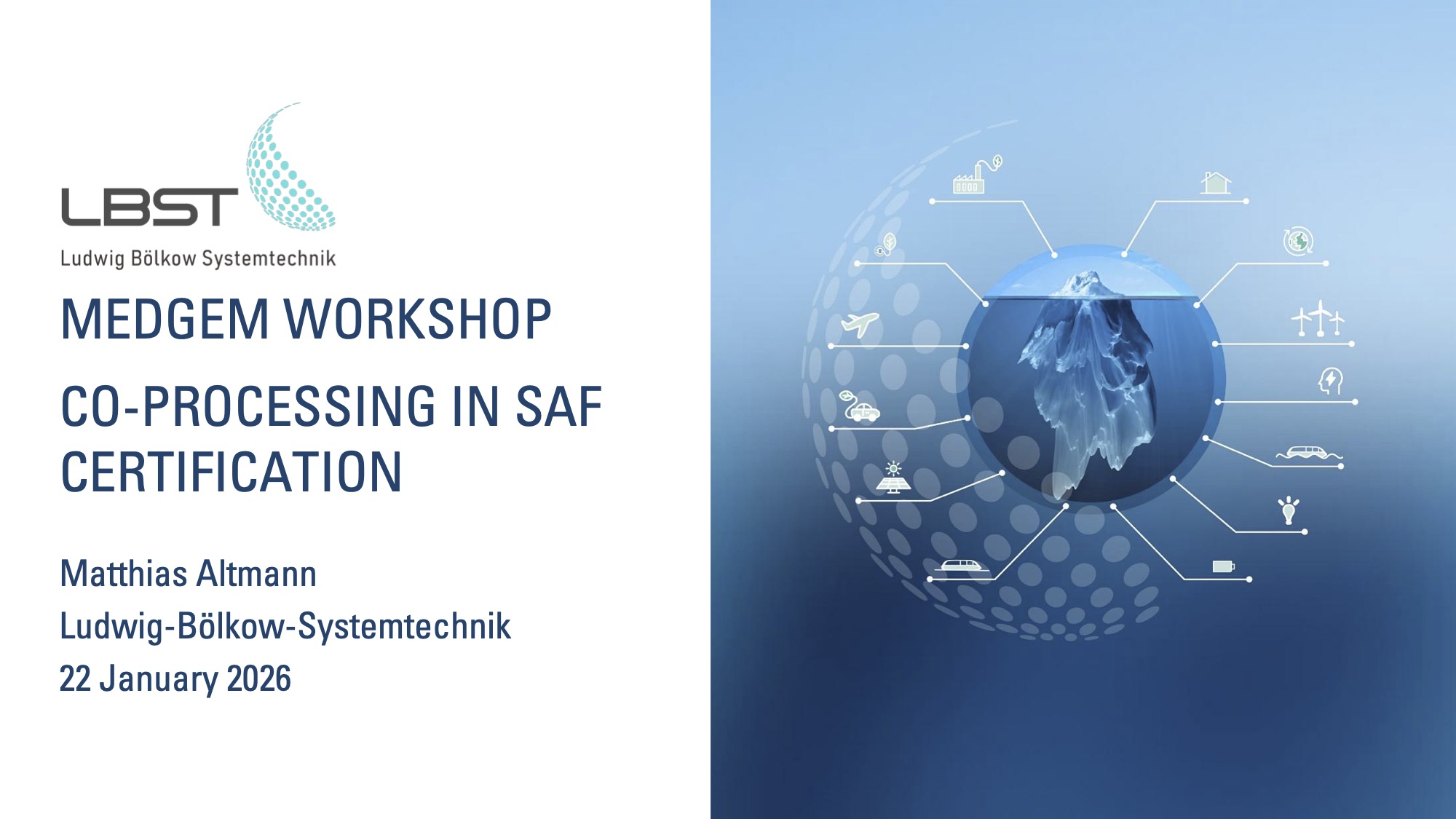
Mathias Altmann, Senior Project Manager and Consultant at Ludwig-Bölkow-Systemtechnik (LBST), provided a detailed explanation of how renewable fuels of non-biological origin (RFNBOs), biofuels and fossil inputs must be accounted for when processed together. In such systems, output shares must be allocated proportionally to the energy content of inputs, and greenhouse gas intensities calculated separately using the methodologies defined under EU law.
This accounting is not merely academic. Fuels that fail to meet minimum greenhouse gas reduction thresholds, typically 70 percent compared to fossil fuels, cannot be counted towards EU SAF targets, even if they are partially renewable. For complex refinery configurations, particularly those combining fossil, bio-based and renewable hydrogen inputs, this creates significant compliance challenges.
Pilot projects, including refinery initiatives in Algeria, are already navigating these issues with support from expert advisory mechanisms such as the MED-GEM Help Desk, illustrating the practical importance of regulatory clarity and applied technical guidance.
Capacity building as a strategic priority
A recurring message throughout the session was the importance of capacity building and transparency, particularly for emerging markets seeking to enter the SAF value chain. Access to reliable data, clear regulatory interpretations and expert support can significantly reduce entry barriers and investment risk.
The MED-GEM Network’s quarterly info sessions, combined with its ReH2 Certification and CBAM Help Desk and Industrial Circle, aim to provide exactly this support: a structured platform for knowledge exchange, regulatory clarification and project-level problem-solving.
As aviation growth continues across the Southern Mediterranean and beyond, the ability to align with EU sustainability standards will increasingly determine market access and competitiveness. SAF may not yet be produced at the scale required, but the regulatory and technical frameworks shaping its future are already in place.
The challenge now is execution.
The next MED-GEM Quarterly Info Session will take place in April 2026. Presentations and follow-up support are available through the MED-GEM Help Desk.
Read the Keynotes :
- Frank Mischler's Keynote (International Power-to-X Hub)
Mathias Altmann's Keynote (LBST)
Watch the recored session : https://youtu.be/W1zd7pXJKWM