Lebanon’s green hydrogen prospects face an industrial test
Lebanon’s green hydrogen prospects face an industrial test
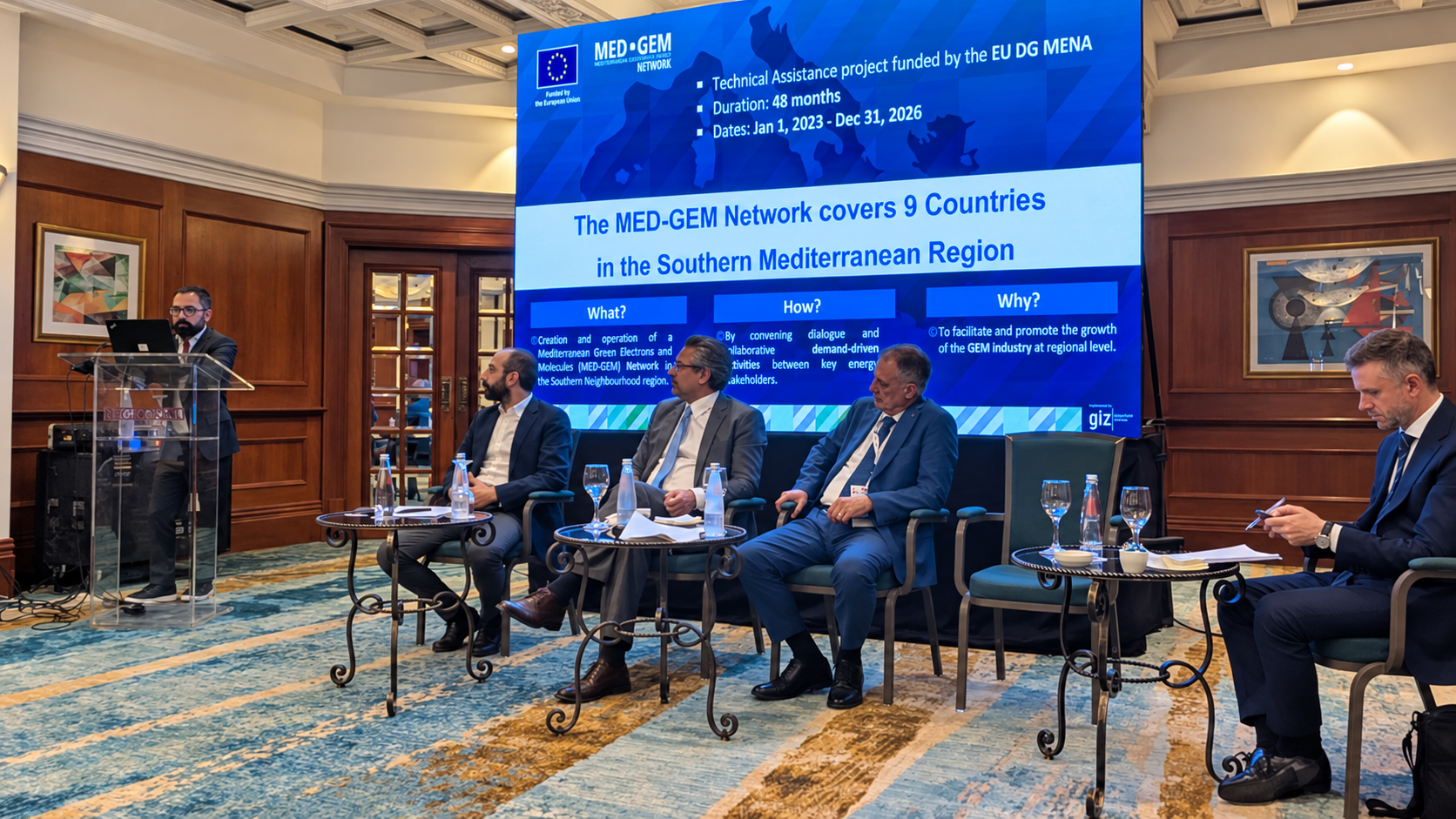
An international partner of the Lebanon Grand Energy Event 2026, the EU-funded MED-GEM Network presented a practical pathway for green hydrogen during the EU Delegation to Lebanon’s session: prioritise renewable electricity, prepare the enabling framework and test industrial applications in the Bekaa.
An industrial boiler could provide an early test of Lebanon’s green hydrogen ambitions. In the Bekaa industrial corridor, factories’ continuous demand for steam offers a concrete application for the fuel. It also poses a question that will shape its prospects: what would it take to make hydrogen work for Lebanese industry?
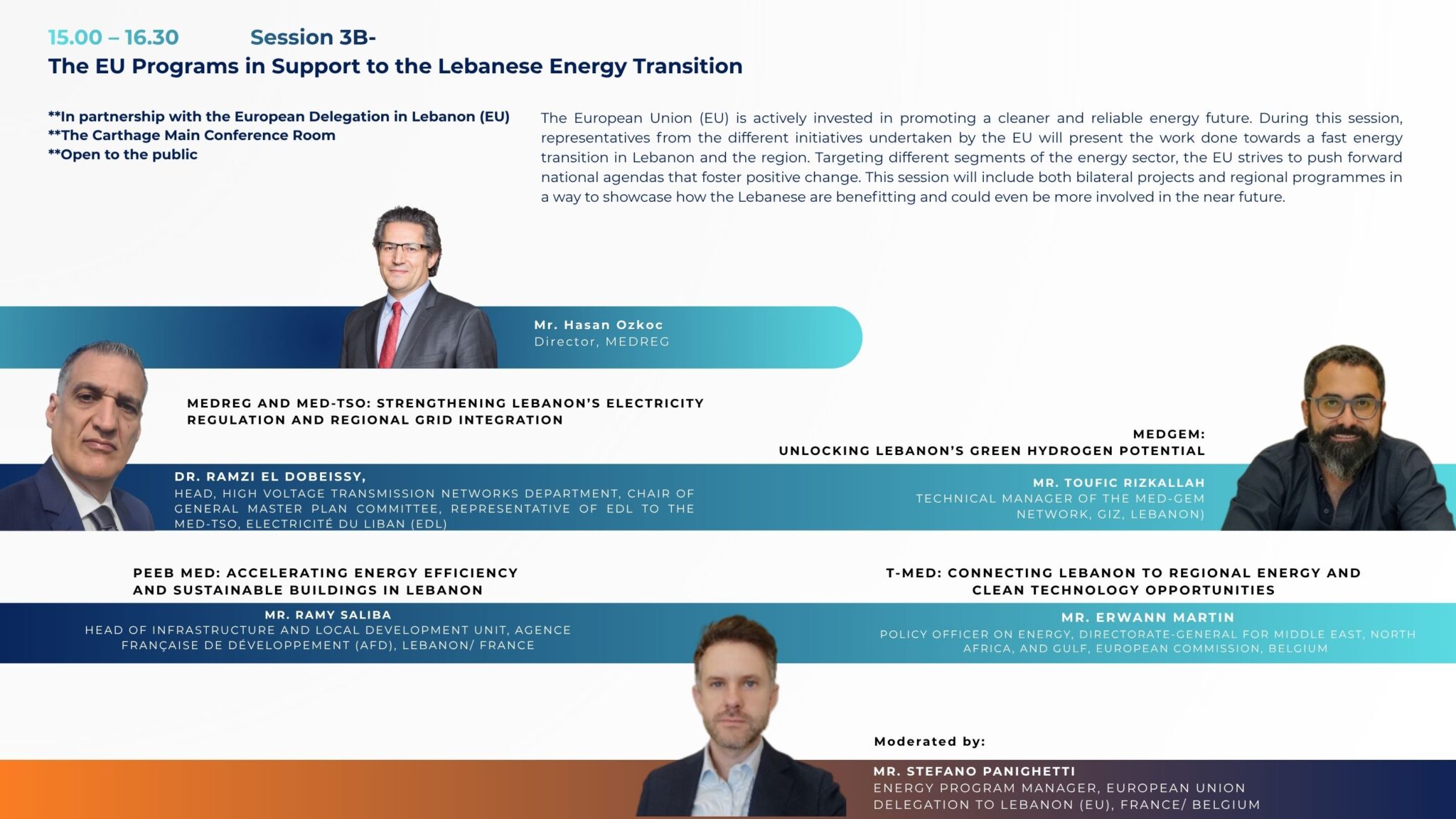
At the Lebanon Grand Energy Event 2026 in Beirut, Toufic Rizkallah, Technical Manager of the MED-GEM Network, addressed that question in his presentation, “Unlocking Lebanon’s Green Hydrogen Potential.” MED-GEM participated as an international partner of the event, bringing its work on national hydrogen planning and industrial feasibility to the discussion.
The presentation formed part of the EU Delegation to Lebanon’s session, “EU programmes in support to the Lebanese energy transition.” Stefano Panighetti, Energy Programme Manager at the EU Delegation to Lebanon, opened the session with remarks and a presentation of EU support to Lebanon’s energy sector. Contributions from MEDREG, MED-TSO, PEEB MED, MED-GEM and T-MED connected hydrogen development with electricity regulation, regional grid integration, energy efficiency and clean technology opportunities.
The national study presented by Rizkallah estimates Lebanon’s theoretical green hydrogen production potential at approximately 510,200 tonnes a year, with solar power accounting for the largest share. Realising that potential would depend on land, water, electricity infrastructure and finance. The preliminary roadmap proposes a more measured target of 77,000 tonnes a year by 2035, with priority given to meeting Lebanon’s 2030 renewable electricity target.
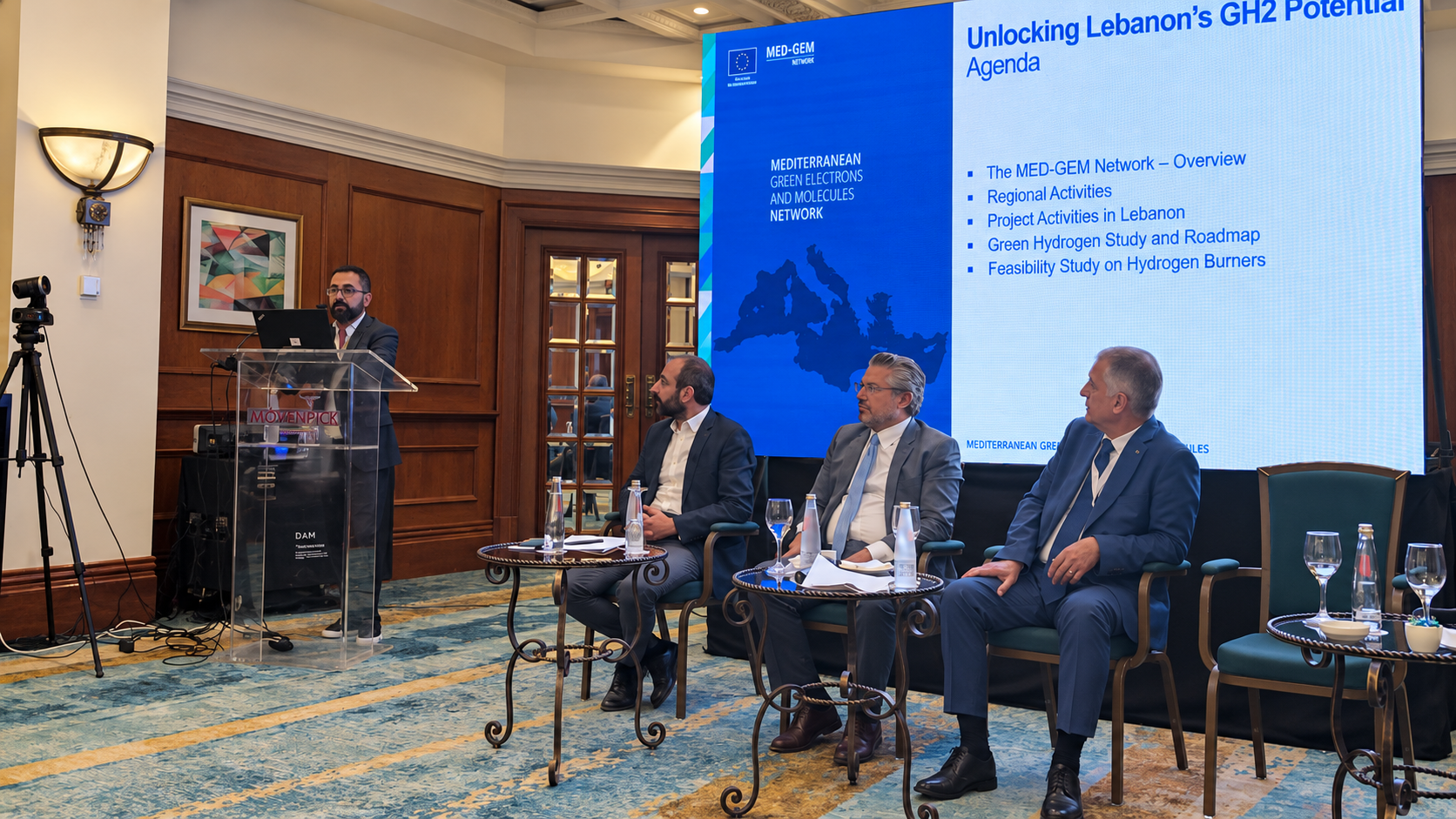
A follow-up study brings that national perspective into the Bekaa’s factories. The assessment, which covered 37 industrial facilities, identified a preferred demonstration site with continuous steam requirements. Its proposed supply model combines centralised hydrogen production near Iaat and Baalbek with delivery to industrial users. Deployment would require replacing the existing heavy fuel oil burner with a Hydrogen Burner along with installing hydrogen-compatible equipment, controls, and safety systems.
The economics remain challenging. In the preferred configuration, the study estimates the levelized cost of Hydrogen (LCOH), including production and storage, at USD 12.60 per kilogram - equivalent to approximately USD 375 per megawatt-hour of thermal energy, compared to USD 64 per MWh thermal for Heavy Fuel Oil (HFO). It therefore recommends proceeding with the pilot as a demonstration supported by grants or concessional finance, positioned as a learning platform with the objective to demonstrate safe hydrogen combustion for industrial steam generation, validate real operating costs, test hydrogen supply reliability, clarify permitting requirements, build local technical capacity, and generate practical evidence for future replication.
For the EU-funded MED-GEM Network, this work builds on national consultations and skills development in Lebanon. A first industrial pilot would provide evidence to guide subsequent investment, helping Lebanese stakeholders assess where hydrogen can contribute to the country’s energy transition.
The MED-GEM Network is funded by the European Union and implemented by GIZ International Services.