
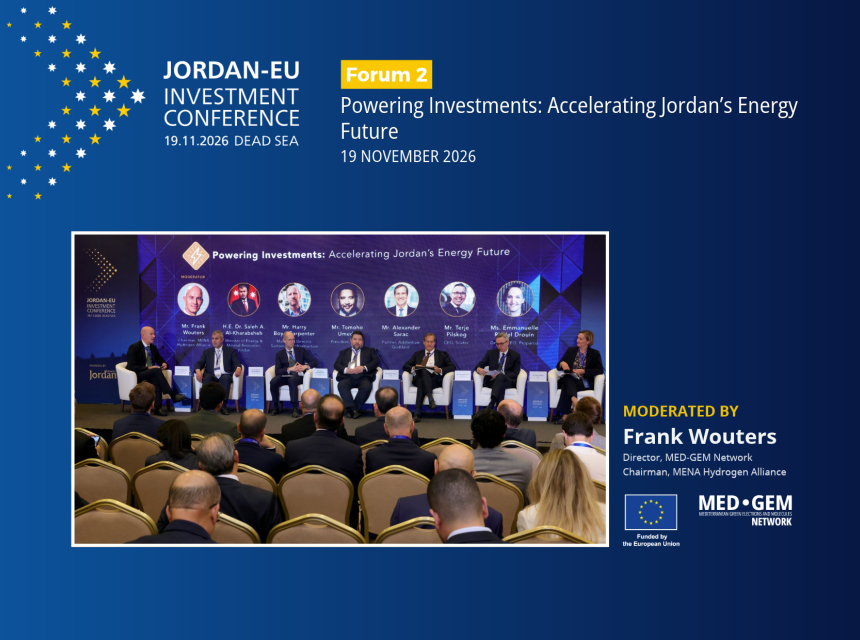
Jordan’s Energy Transition: From Renewable Ambitions to Bankable Investments
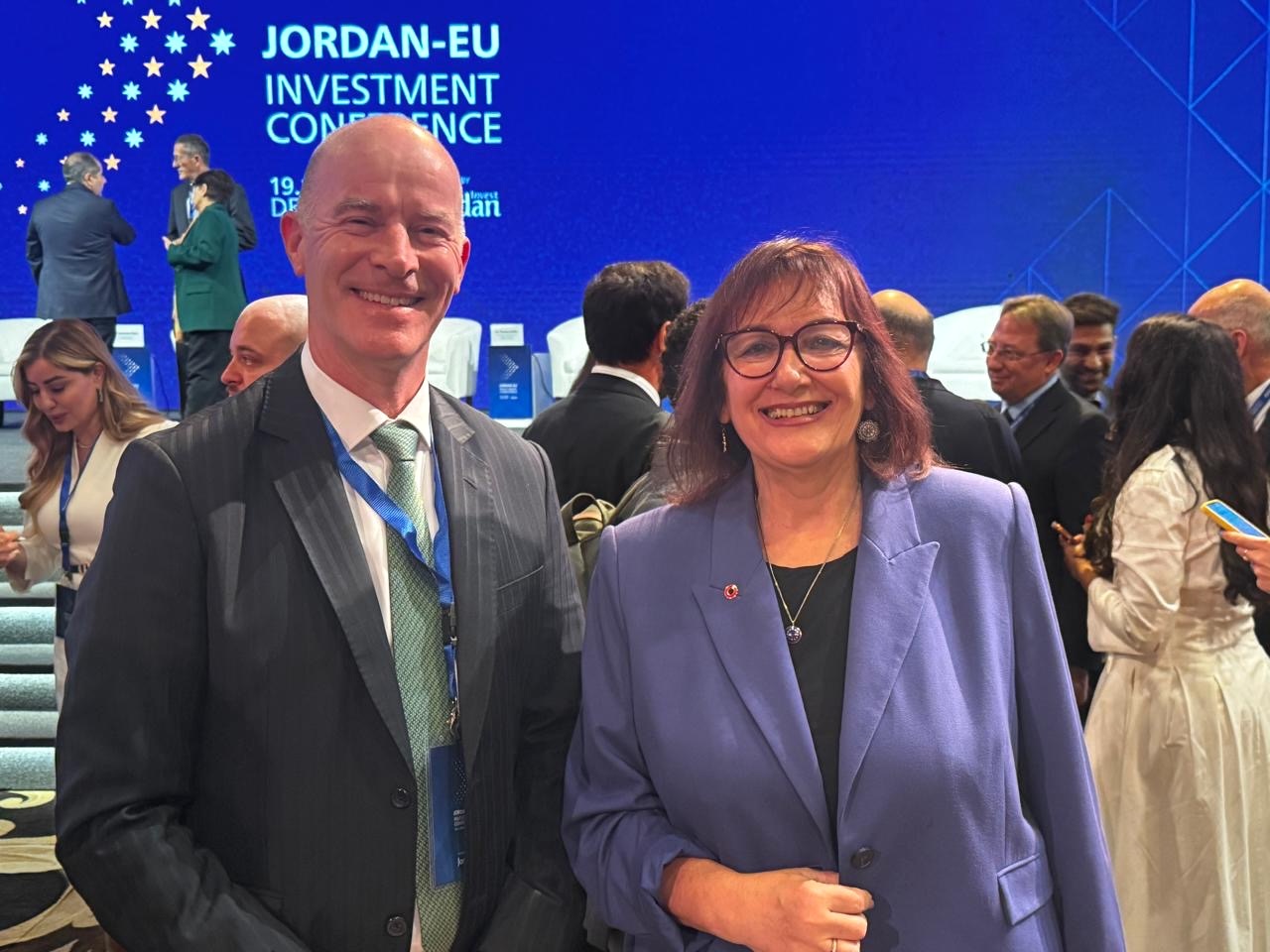
At the Jordan–EU Investment Conference 2026, MED-GEM Network Director Frank Wouters moderated a high-level discussion on the infrastructure, regulatory reforms and financing solutions needed to turn Jordan’s clean energy ambitions into investable projects.
Dead Sea, Jordan | 19 November 2026
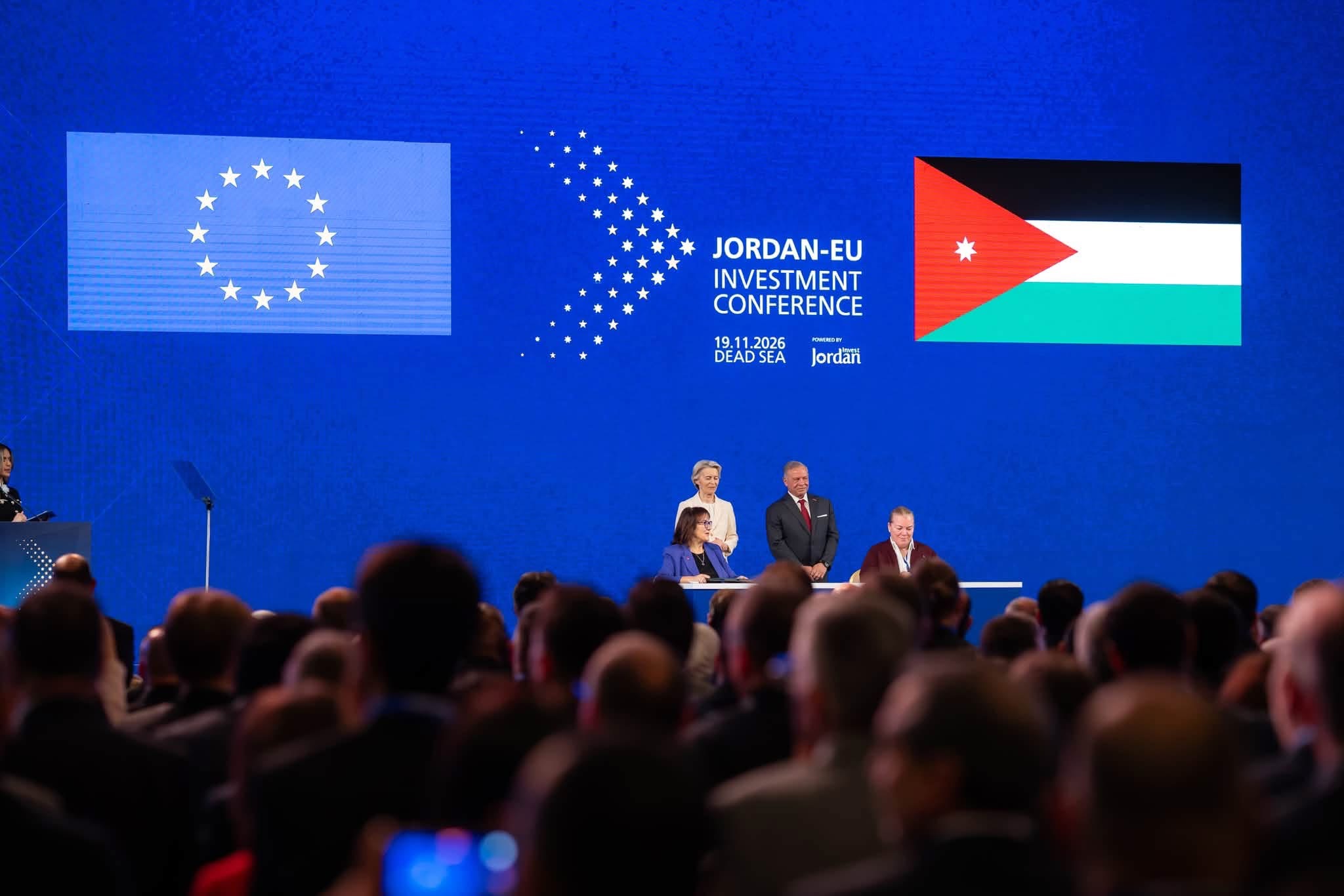
Jordan has established a strong renewable energy track record, with approximately 2 GW of solar and 600 MW of wind capacity in operation. Now, as the Kingdom targets 40% renewable electricity by 2035, up from around 27% today, the challenge is shifting from expanding generation capacity to building an integrated, flexible and financially sustainable energy system.
This transition was at the heart of Forum 2, “Powering Investments: Accelerating Jordan’s Energy Future,” held during the Jordan–EU Investment Conference 2026.
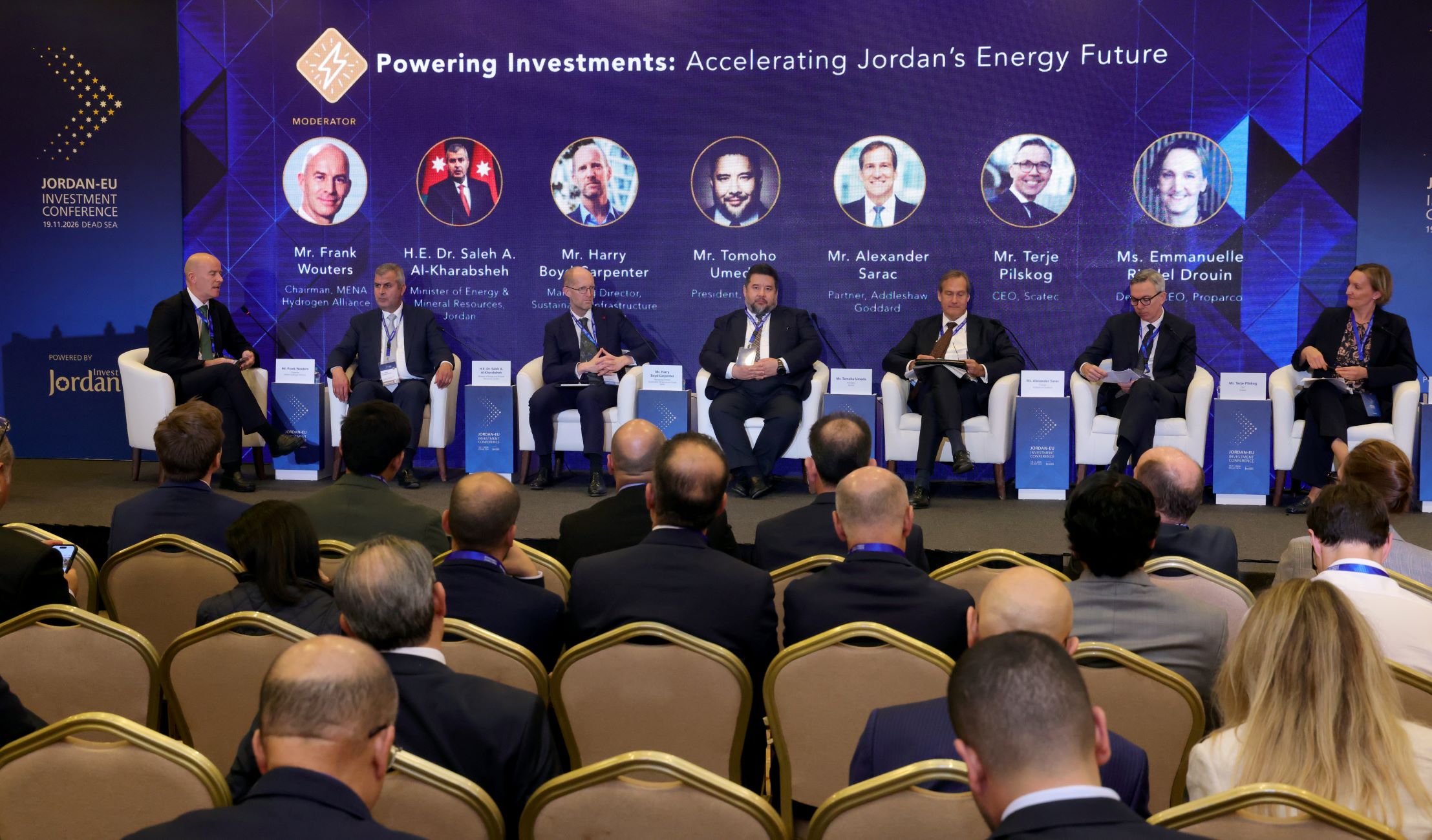
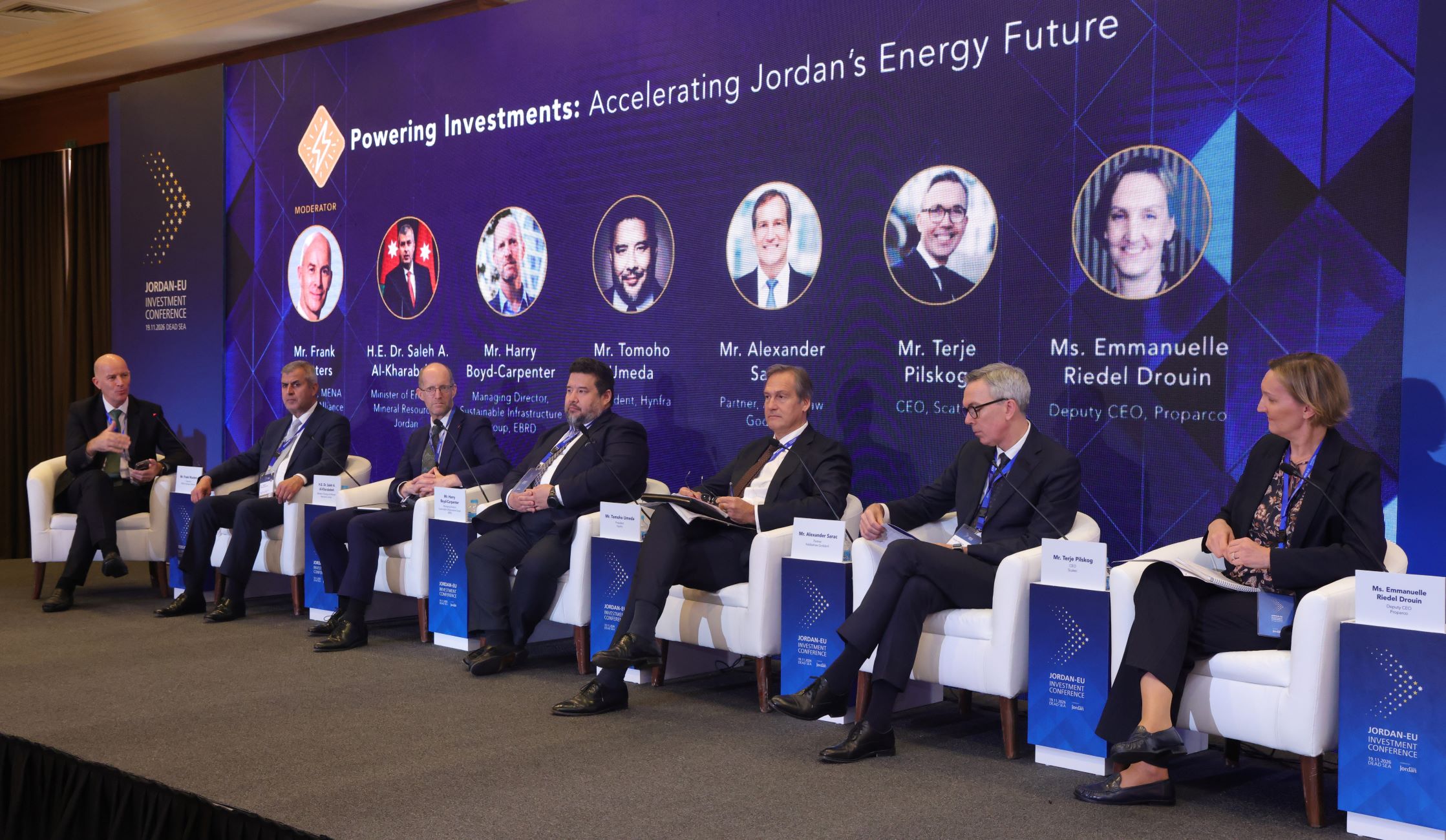
Moderated by Frank Wouters, Director of the EU-funded MED-GEM Network and Chairman of the MENA Hydrogen Alliance, the session brought together government representatives, international financial institutions, energy developers and legal experts to examine how Jordan can accelerate investment in renewable energy, storage, grid infrastructure and green hydrogen.
Beyond Generation: Building the Energy System
Jordan’s early opening to private investment, established power purchase agreements with the National Electric Power Company (NEPCO) and clear institutional responsibilities have helped create a credible environment for renewable energy development.
During the discussion, H.E. Dr. Saleh Al-Kharabsheh, Minister of Energy and Mineral Resources, outlined the priorities of Jordan’s Energy Sector Strategy 2025–2035, emphasising the need to modernise electricity networks and improve system flexibility.
Key investments include battery energy storage systems (BESS) to address evening demand peaks, stronger transmission infrastructure and regional electricity interconnections. The Kingdom is also advancing the Mujib Dam pumped-storage hydropower project, targeted for operation in 2032, alongside smart-grid technologies and digital solutions to improve system management.
Regulatory reform is equally important. Jordan’s General Electricity Law of 2025 recognises energy storage as a regulated activity and introduces provisions for independent transmission systems. Together with emerging private-to-private electricity supply and wheeling arrangements, these developments could open new opportunities for industrial consumers and private investors.
The message emerging from the discussion was clear: the next investment cycle must address the entire energy system, not renewable generation alone.
Green Hydrogen: From Ambition to Investment Readiness
Jordan’s solar and wind resources, strategic location and access to international markets offer opportunities to develop green hydrogen and ammonia value chains.
However, the panel emphasised that financeable near-term projects must take priority over long-term production ambitions.
The proposed Aqaba green hydrogen hub illustrates the importance of coordinated infrastructure development. Shared facilities, reliable offtake agreements, credible certification and appropriate commercial structures can help reduce costs and improve project bankability.
The discussion also addressed Jordan’s potential to become a regional clean energy hub, including future exports of renewable electricity and green hydrogen to neighbouring and European markets.
Bankability: Turning Projects into Investments
Attracting long-term capital requires predictable regulations, commercially viable revenue models and an appropriate allocation of risks.
The panel examined how international financial institutions (IFIs) can help mobilise private investment through guarantees, credit enhancement and risk-mitigation instruments, particularly for emerging technologies and energy storage projects.
Jordan’s established renewable energy investment experience provides a foundation for this next phase. The challenge is to translate that credibility into financing structures capable of bringing more complex infrastructure and hydrogen projects to financial close.
Jordan’s Most Valuable Renewable Resource: Its People
Beyond infrastructure and financing, Frank Wouters highlighted a distinctive advantage of Jordan’s investment environment: its human capital.
In his opening remarks, he described Jordanians themselves as the country’s most unique renewable resource, recognising their entrepreneurial spirit, expertise and reliability.
Trust, he stressed, is an economic asset. Strong local capabilities and credible partnerships can reduce perceived investment risks and contribute to a lower cost of capital.
Reflecting on the discussion, Frank Wouters concluded:
“Jordan has the sun, the wind, the people and the track record. The next step is building the system around them: grids, storage and the right contracts. With trusted partners and IFIs at the table, Jordan can turn its 40% target into investable projects.”
Frank Wouters, Director of MED-GEM Network and Chairman of the MENA Hydrogen Alliance
Connecting Policy, Finance and Industry
The session brought together:
- H.E. Dr. Saleh Al-Kharabsheh, Minister of Energy and Mineral Resources, Jordan
- Harry Boyd-Carpenter, Managing Director, Sustainable Infrastructure Group, EBRD
- Terje Pilskog, CEO, Scatec
- Emmanuelle Riedel Drouin, Deputy CEO, Proparco
- Tomoho Umeda, CEO, Hynfra
- Alex Sarac, Partner, Addleshaw Goddard
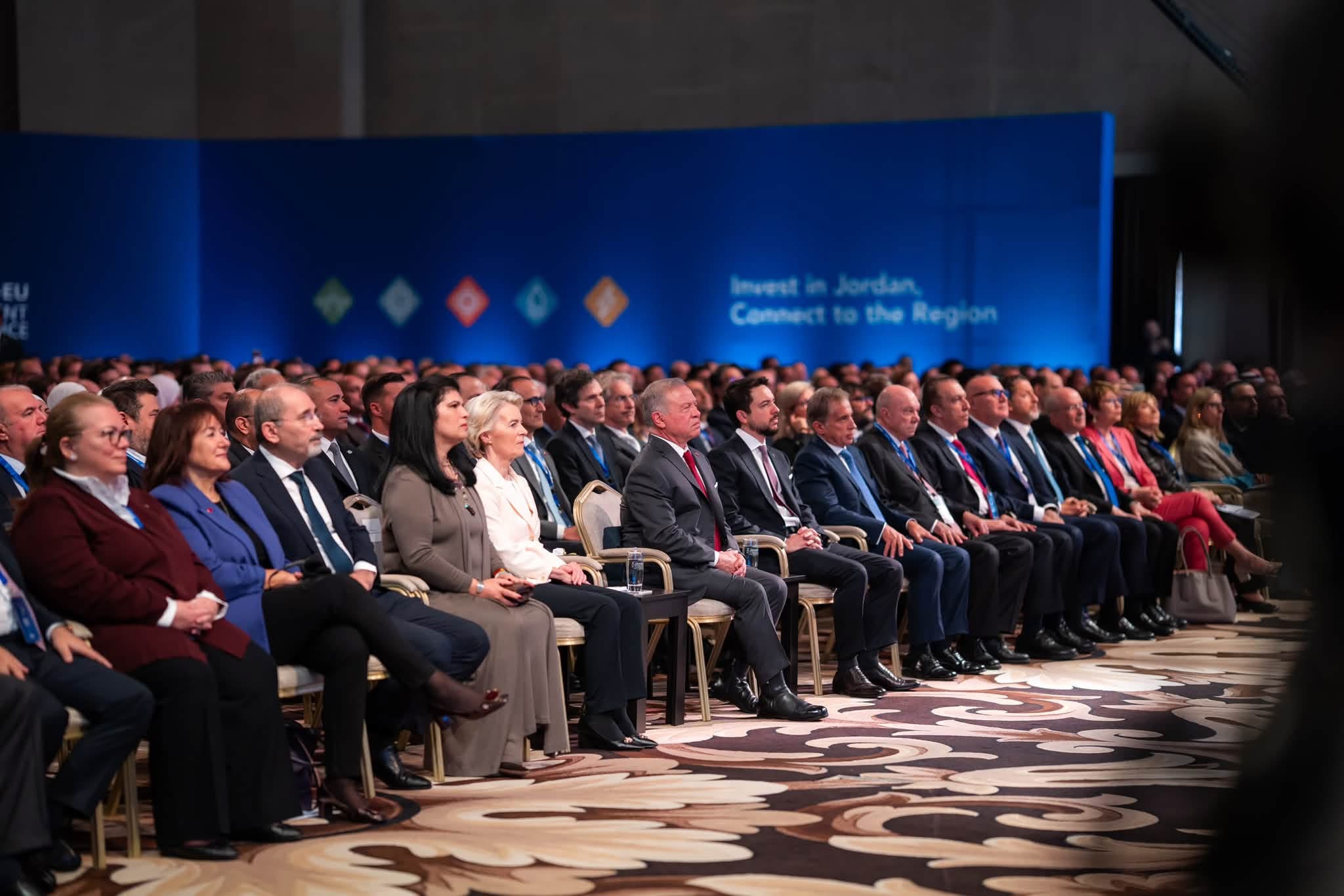
Held within the framework of the EU–Jordan Strategic and Comprehensive Partnership, the Conference highlighted the importance of connecting public policy, international finance and private sector expertise to accelerate sustainable energy investments.
The discussion closely reflects MED-GEM Network’s four areas of action: Policy and Regulation, Technology and Industry, Infrastructure, and Finance and Investment, and its mission to strengthen EU–Southern Mediterranean cooperation on renewable energy and green hydrogen.
Jordan’s experience offers a broader lesson for the Mediterranean energy transition: renewable energy potential creates opportunities, but integrated infrastructure, enabling regulation, trusted partnerships and bankable projects are what turn those opportunities into lasting economic value.
Photo source: petra.gov.jo