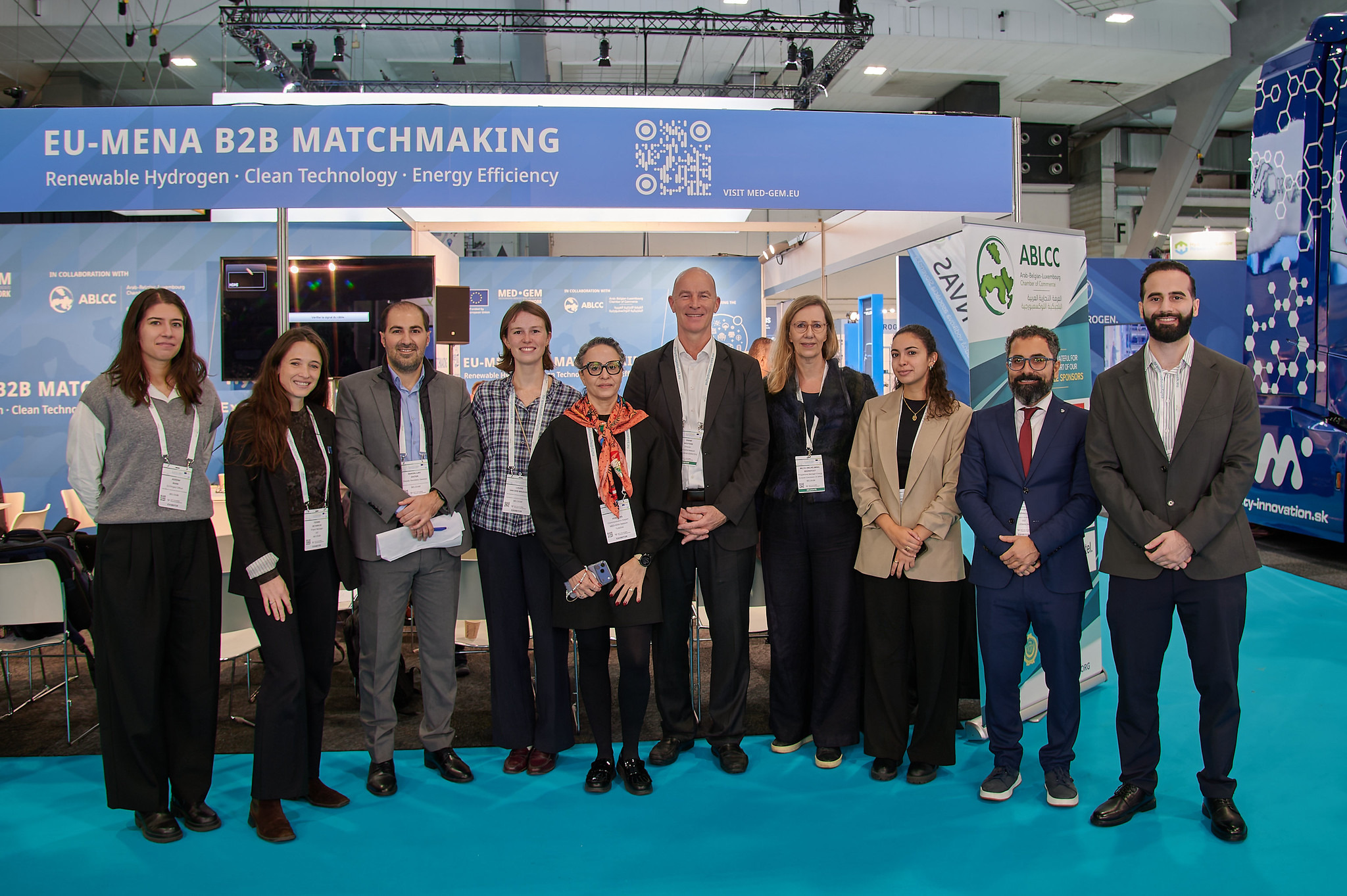
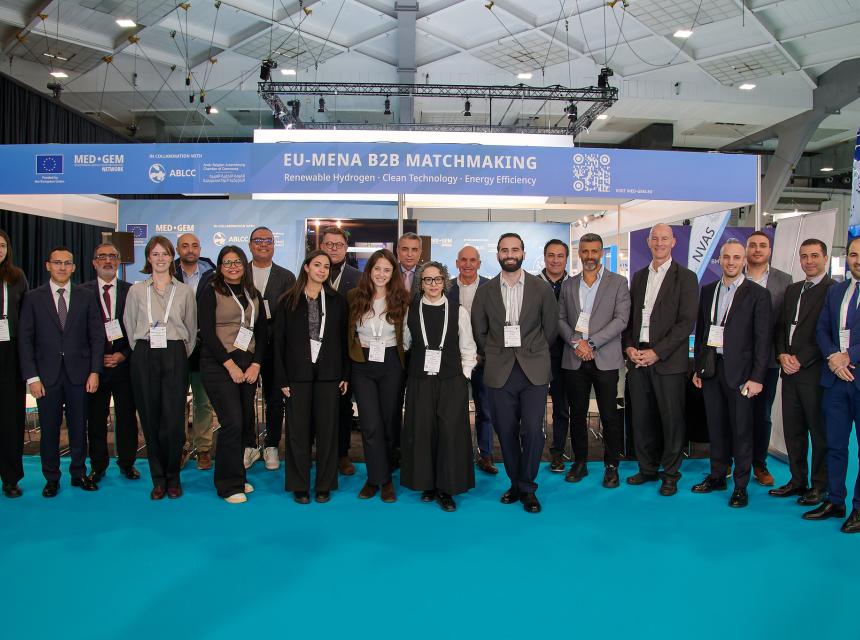
EU–MENA matchmaking in Brussels: 186 meetings and the next steps
At European Hydrogen Week 2026, MED-GEM Network and ABLCC brought 16 MENA clean energy projects together with more than 50 European and international organisations. With 73 meetings leading to an agreed follow-up, the programme established a practical basis for cooperation beyond Brussels.
A clean energy project needs more than a promising technology. It needs customers, finance and partners who can help deliver it. Bringing those elements together was the purpose of the EU–MENA business matchmaking jointly organised by MED-GEM Network and the Arab-Belgian-Luxembourg Chamber of Commerce (ABLCC) on 27–28 October 2026.
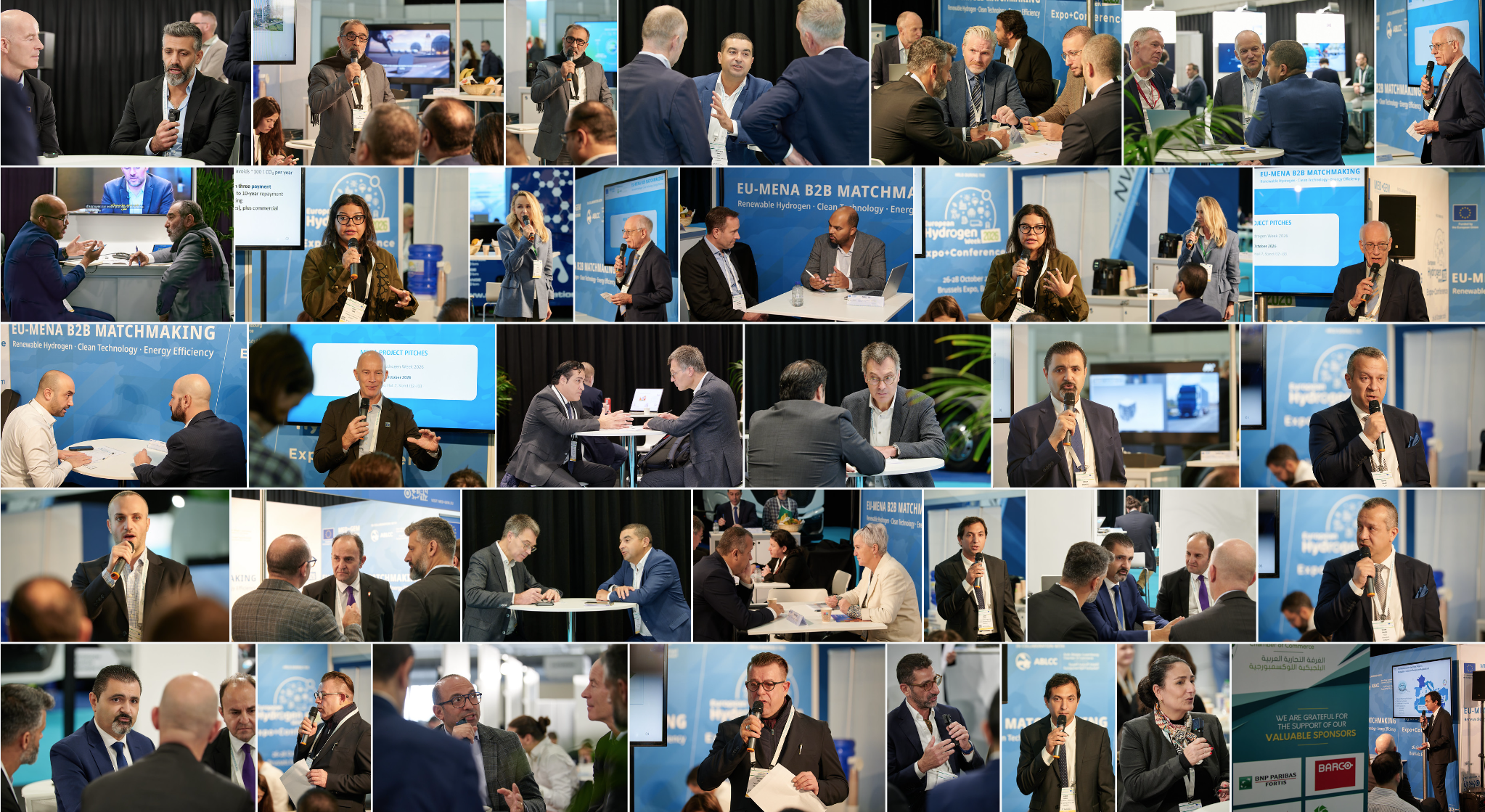
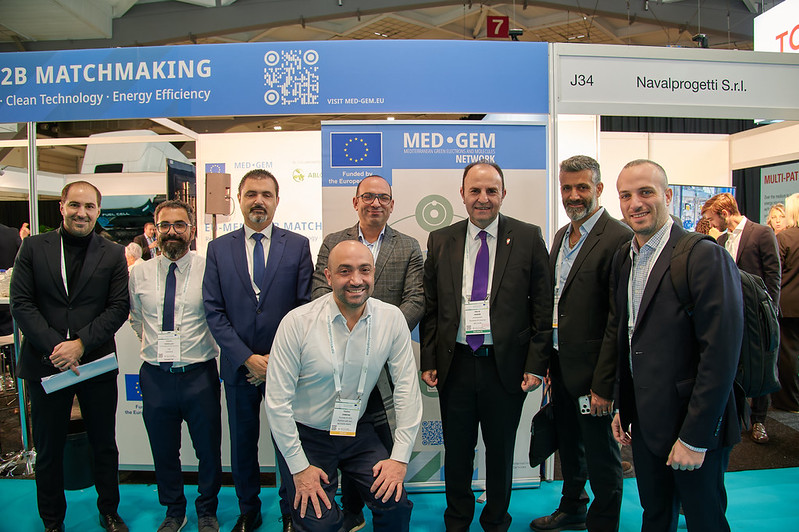
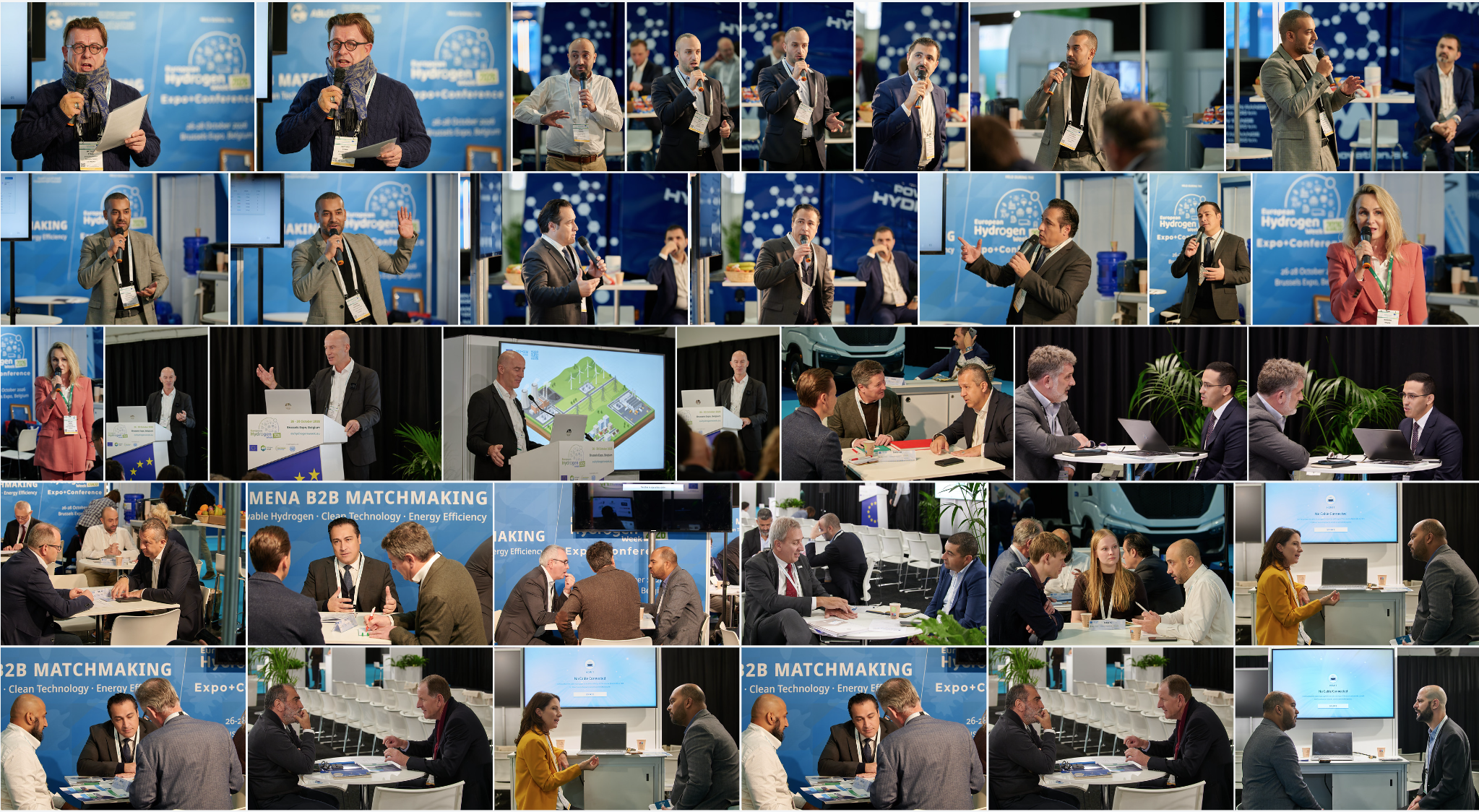
Held at Brussels Expo, Hall 7, stands J32–J33, the programme combined short project pitches with focused bilateral discussions. Participants explored specific questions: which technology would fit a project, who could buy its output, what an investor would need to assess it, and how construction and operation could be organised.
The results report records 186 meetings held, including 13 arranged on site. In 73 meetings, participants agreed to a follow-up call or meeting. In 15 discussions, a confidentiality agreement was identified as the next step towards exchanging more detailed information.
Matching partners to project needs
The programme began with a public call that attracted 80 applications. 16 projects were selected, and represented in Brussels, covering Egypt, Jordan, Lebanon, Libya, Morocco and Tunisia.
The delegation reflected the breadth of the region’s clean energy opportunities. Renewable hydrogen and its derivatives featured alongside solar generation, battery storage, industrial efficiency, water treatment, microgrids and electric mobility.
Four thematic sessions organised the exchanges around the support projects need:
- Finance and investment
- Buyers, offtakers and market partners
- Technology, equipment and specialists
- Engineering, construction and operations
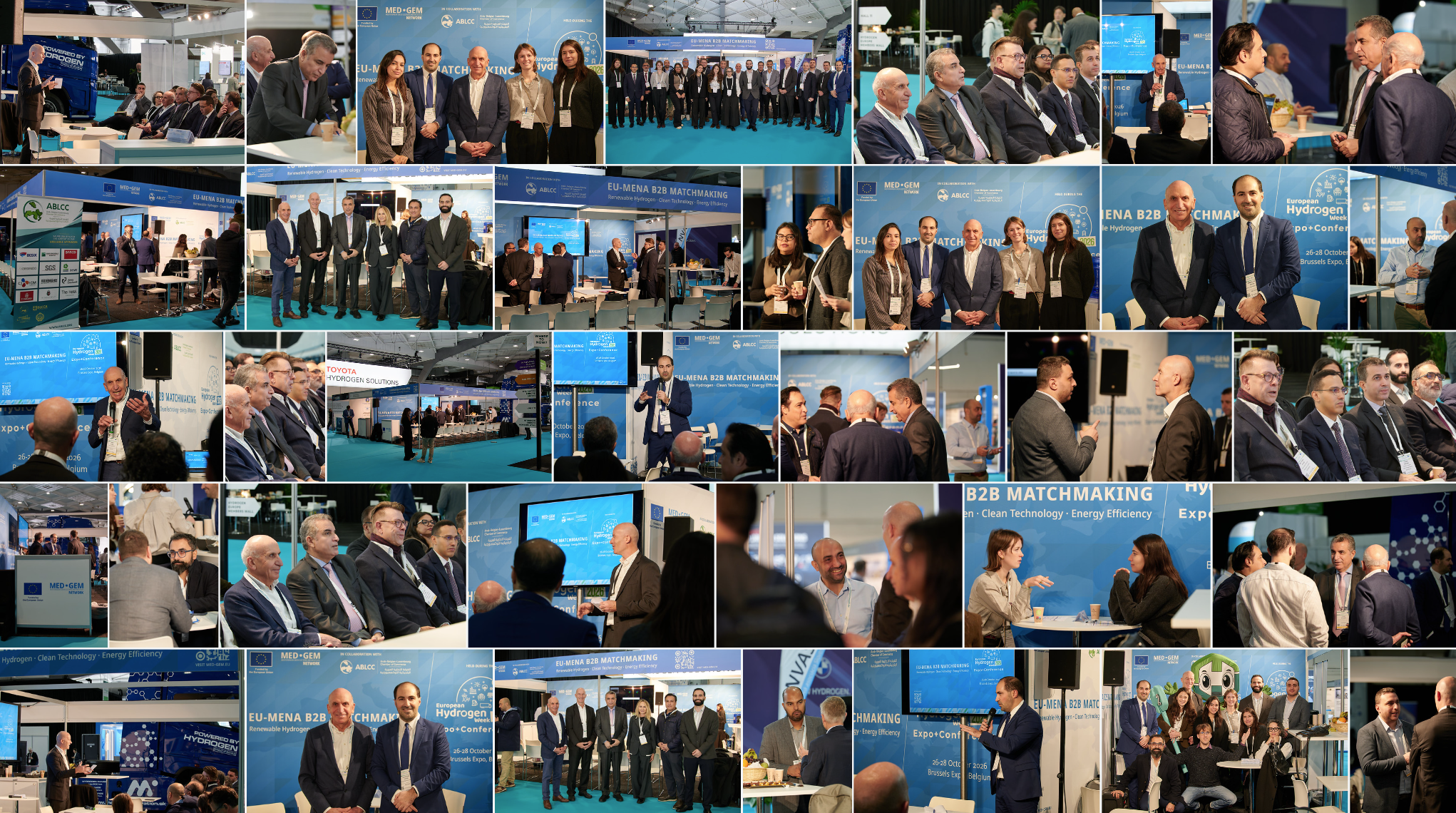
Participants selected relevant projects before the event. Short pitches introduced each opportunity, followed by bilateral meetings to examine potential cooperation in greater detail.
The range of projects also created connections across sectors. Hydrogen developers could meet equipment suppliers and infrastructure specialists; solar, water and mobility businesses could explore opportunities with engineering firms, investors and technology partners.
Hear directly from Matthias Staub of Albaretos, presenting the Libya Green Energy Platform, Nabeel Abu Ata of Kawar Energy in Jordan and Ghassen Chattouna of Park & Charge in Tunisia.
Strong technical engagement and a different route to finance
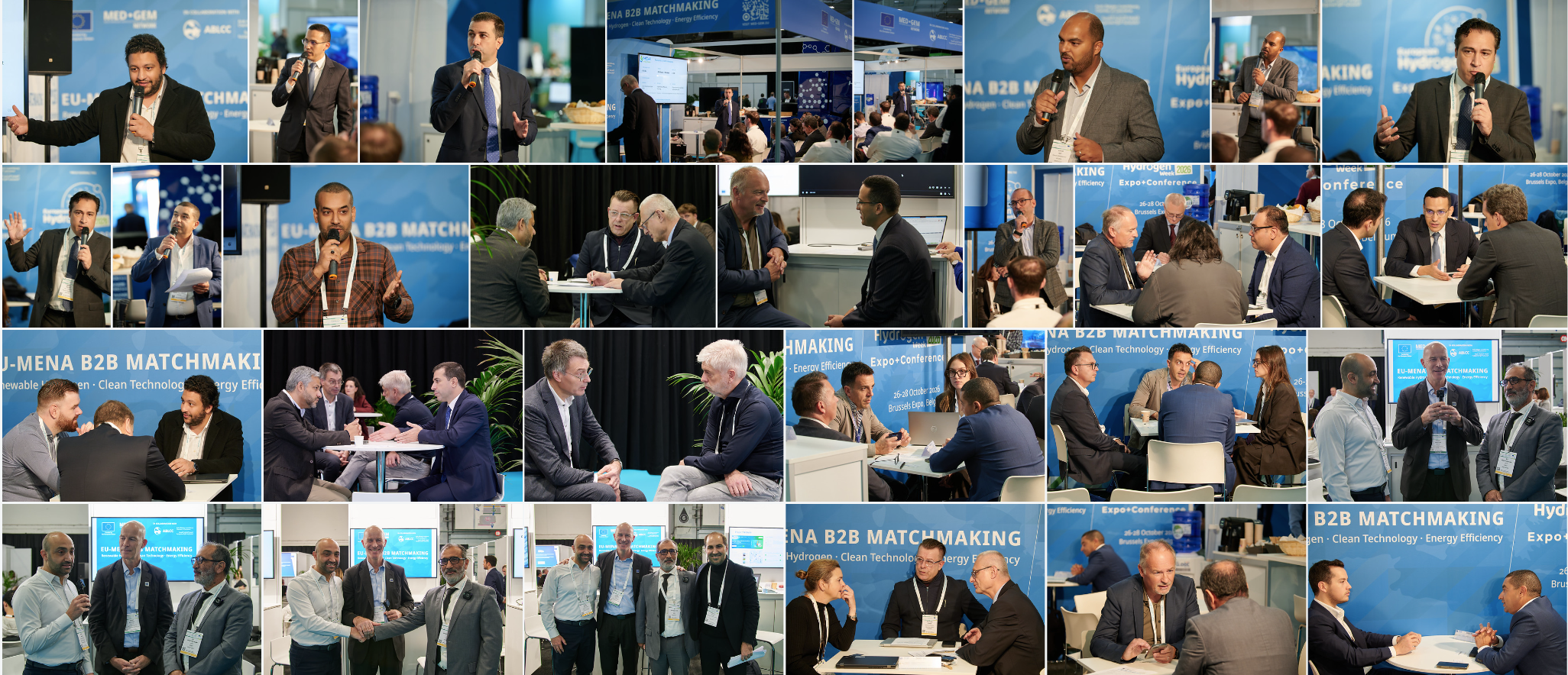
Technology and engineering companies formed the largest groups of participants. Electrolyser suppliers, infrastructure and port operators, certification specialists and construction firms brought expertise relevant to projects at different stages of development.
The programme delivered 173 scheduled meetings, supplemented by 13 additional meetings arranged on site as participants identified further opportunities.
Interviews recorded during the event capture perspectives from European participants, including Marc Oliver Gomperts of FEV, Gabriele Manfredi of VITO and África Castro of H2B2 Electrolysis Technologies.
Engagement with financiers and buyers followed a different pattern. Several institutions preferred to review project information before holding online meetings. Further exchanges are being pursued with development finance institutions, export credit agencies and market-support organisations such as H2Global.
This points to a practical lesson: an introduction is most useful when a project is ready to explain its commercial assumptions, financing requirements and development milestones. Understanding a prospective partner’s mandate is as important as securing a meeting.
An agreement between Partners with Sun and SNEP
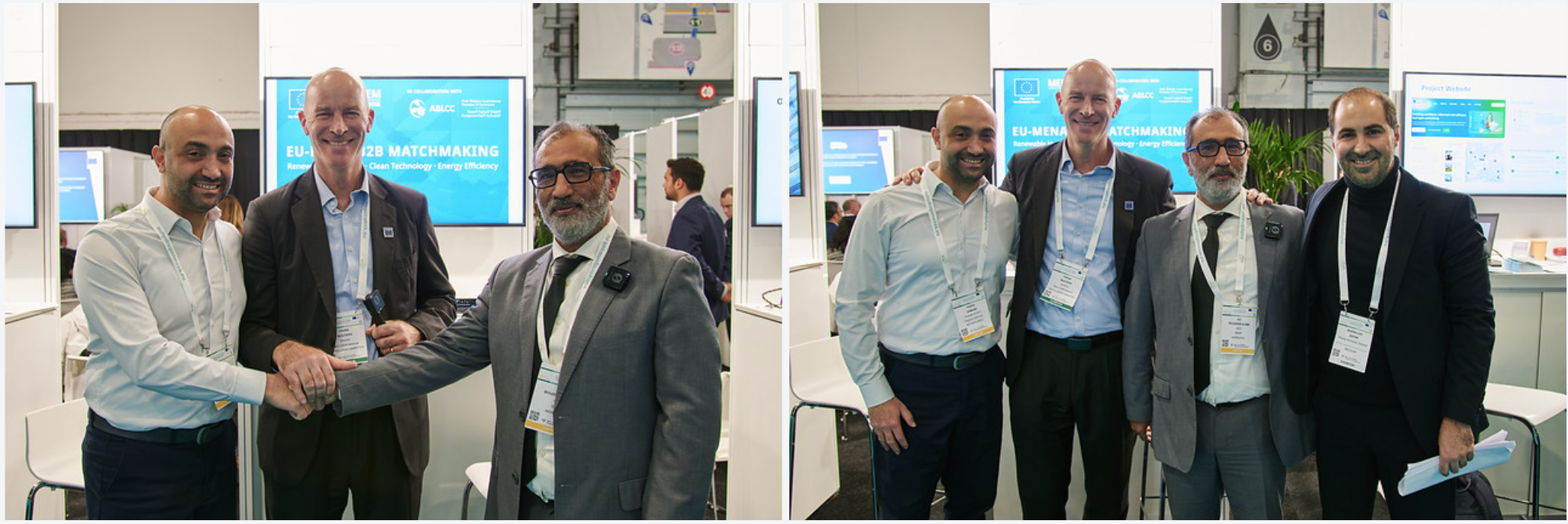
An agreement between Partners with Sun of Lebanon and Netherlands and SNEP of Morocco provided a concrete milestone associated with the programme.
It also demonstrated that a platform designed to strengthen EU–MENA connections can create opportunities for cooperation within the Southern Mediterranean. The value of bringing projects together extends beyond their individual meetings with European partners.
Watch Partners with Sun and SNEP sign their agreement, and hear from Ali Alami, Managing Director of SNEP.
This signed agreement is distinct from the 15 discussions in which confidentiality agreements were identified as a possible next step.
At the EU Projects Pavilion: where will hydrogen find its first markets?
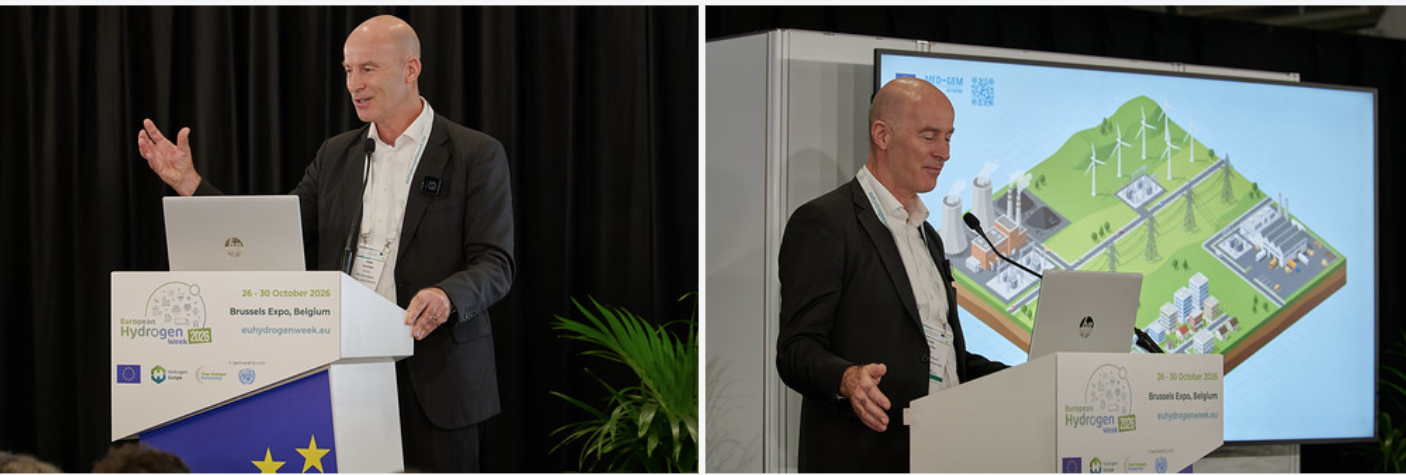
The commercial questions raised at the B2B tables also featured in MED-GEM Director Frank Wouters’ presentation at the EU Projects Pavilion on 28 October.
In “Hydrogen: A stupid idea until it isn’t — Value chains, prices and the first markets”, Wouters examined how hydrogen’s prospects depend on the applications and markets it serves.
Drawing a parallel with solar power’s development, he explored the influence of prices and policy on emerging demand. Synthetic aviation fuels and strategic and seasonal energy storage were among the applications discussed.
Presented in the “EU Projects | Regional value chains” session alongside PHYRENE and PermittHy, the talk connected regional cooperation with a central investment question: what will make emerging clean energy value chains commercially viable?
Explore Frank Wouters’ presentation.
Lebanon’s clean energy future: local needs, wider partnerships
A MED-GEM Network podcast recorded on 27 October, alongside the matchmaking programme, brought these questions into focus through Lebanon’s experience.
Hosted by Frank Wouters, the conversation brought together H.E. Walid Haidar, Ambassador of Lebanon to the EU and Belgium, and representatives of the Tripoli Special Economic Zone, ME Green, BUTEC, Floating Hydrogen Ports, SACOTEL and Sacotel ZNSHINE.
Their priorities were practical. ME Green and Sacotel ZNSHINE discussed their ambition to expand village microgrids. The Tripoli Special Economic Zone highlighted reliable, competitively priced electricity as a requirement for industrial development. BUTEC outlined its interest in financing and technology partnerships, while Floating Hydrogen Ports presented its offshore renewable energy and hydrogen concept.
The projects differed in scale and maturity, but shared a need for finance, technical expertise and implementation partners. Ambassador Haidar also highlighted the international networks of Lebanese businesses, extending potential cooperation into Africa, the Gulf and other markets.
Read Lebanon’s Clean Energy Future: Connecting Projects and Partners at European Hydrogen Week, listen to the podcast on Spotify, or watch the full conversation on YouTube.
Individual interviews offer further perspectives from Philippe El Khoury of ME Green, Joumana Hosri Haji of Sacotel ZNSHINE and Sumer Daou of Floating Hydrogen Ports.
Continuing the conversation at ABLCC
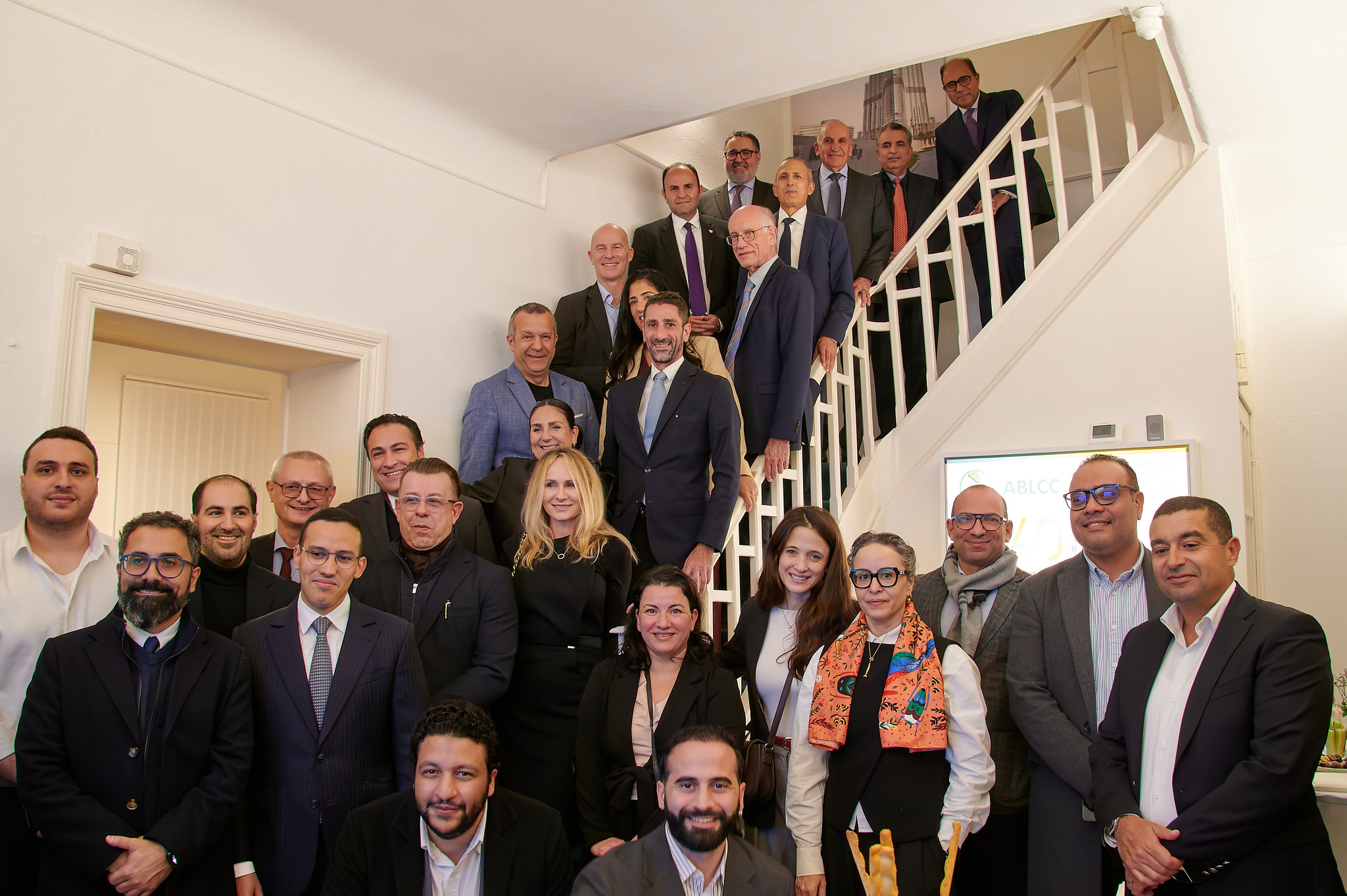
The reception hosted in Brussels by ABLCC on 27 October provided an opportunity for project promoters, business partners and diplomatic representatives to continue their exchanges beyond the meeting tables.
Guests included H.E. Yousef Bataineh, Ambassador of Jordan to the EU and Belgium; H.E. Sahbi Khalfallah, Ambassador of Tunisia to the EU and Belgium; H.E. Ahmed Abu Zeid, Ambassador of Egypt to the EU and Belgium; H.E. Jalal Mahdi Al Aashi, Ambassador of Libya to the EU and Belgium; and H.E. Walid Haidar, Ambassador of Lebanon to the EU and Belgium.
They were joined by Mr Almoataz Ibrahim, Deputy Head of the Economic and Commercial Bureau at the Embassy of Egypt; Ms Wissam Hiti, Economic Counsellor at the Embassy of Morocco in Brussels; and Ms Haguer Magdi, Head of the Trade Commission Department at the Embassy of Belgium in Cairo.
MED-GEM Network warmly thanks the ABLCC team for its dedication and hospitality, and the diplomatic and trade representatives for supporting these exchanges.
View the photos from the ABLCC reception.
What happens next?
MED-GEM Network and ABLCC are jointly following up 24 requested introductions and online meetings. A knowledge-sharing meeting is also to be arranged between the Tripoli Special Economic Zone in Lebanon and the Aqaba Special Economic Zone in Jordan.
An online workshop has been proposed for all 17 selected projects to strengthen their preparation for debt and equity financing. The aim is to help promoters present their financing needs and understand what prospective investors require.
Further engagement with Dhaman and ICIEC will explore how European technology and companies could connect with European and Arab financing and risk-cover instruments.
Participant feedback and progress reviews at three and six months are intended to establish which discussions advance, what obstacles remain and where further support would be useful.
The next measure of success will be the progress of these relationships: the information exchanged, technical questions resolved, commercial opportunities assessed and partnerships developed.
Watch the interviews and explore the resources
Project promoters and industry representatives
- Matthias Staub — Executive Director, Albaretos; presenting LiGEP, the Libya Green Energy Platform
- Nabeel Abu Ata — Vice-Chairman, Kawar Energy, Jordan
- Ali Alami — Managing Director, SNEP, Morocco
- Ghassen Chattouna — Co-founder and Chief Commercial Officer, Park & Charge, Tunisia
- Philippe El Khoury — CEO, ME Green
- Joumana Hosri Haji — CEO, Sacotel ZNSHINE
- Sumer Daou — CEO, Floating Hydrogen Ports
European technology and research partners
- Marc Oliver Gomperts — Business Development, FEV
- Gabriele Manfredi — Business Developer, VITO
- África Castro — H2B2 Electrolysis Technologies
Podcast, presentation and event highlights
- Explore the full YouTube interview playlist
- Watch the Partners with Sun–SNEP agreement signing
- Listen to Lebanon’s Clean Energy Future on Spotify
- Watch the full Lebanon podcast on YouTube
- Read the article on Lebanon’s clean energy projects and partnerships
- View Frank Wouters’ presentation at the EU Projects Pavilion
Photo albums
- 26 October — Day 1
- 27 October, morning — Finance and investment partners
- 27 October, afternoon — Buyers, offtakers and market partners
- 27 October — ABLCC reception
- 28 October, morning — Technology, equipment and specialist partners
- 28 October, afternoon — Engineering, construction and operating partners
Meeting figures and follow-up actions are drawn from the programme’s results report. Project descriptions and ambitions presented in the interviews reflect the speakers’ contributions at the event.
Photos courtesy of MED-GEM Network.
MED-GEM Network is funded by the European Union and implemented by GIZ International Services. The EU–MENA B2B matchmaking was jointly organised by MED-GEM Network and the Arab-Belgian-Luxembourg Chamber of Commerce (ABLCC).